This Is Marketing Summary: Key Ideas from Seth Godin's Book
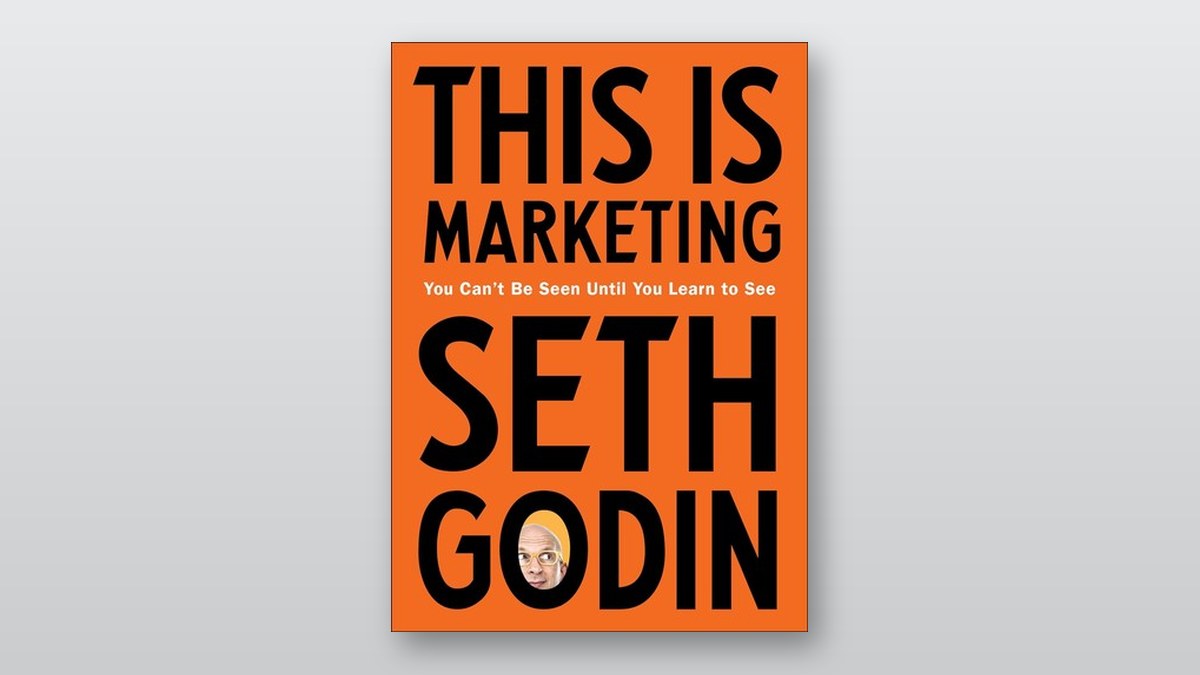
This Is Marketing: You Can't Be Seen Until You Learn to See by Seth Godin argues that marketing is the work of helping people make a change they already want, not of shouting at as many people as possible. Per Graham Mann's book notes, the core move is to find the smallest viable audience first, understand their worldview, and make something they will be proud to spread. For a seller, the usable part is simple: decide exactly who you are for, speak to what that group believes and wants, and earn permission to keep talking to them.
The book was published by Portfolio in 2018, per Open Library. This is a short summary in our own words, based on published summaries and reviews, not a retelling of the book.
The book in brief
Open Library lists the English edition from Portfolio/Penguin, 2018, at 267 pages, with the subtitle *You Can't Be Seen Until You Learn to See*. Admired Leadership says Godin writes to marketers who are already good at what they do, and that he softens the old aggressive, industrial approach to marketing. Marketers, in this view, solve other people's problems rather than using customers to solve their own company's.
Graham Mann's book notes calls it a quick read and a brief overview of themes in Godin's other work, such as permission marketing, storytelling and engaging with customers. Mann also says he does not think it is a breakthrough marketing book, but a good introduction to Godin's thinking.
Marketing as making change
The book frames marketing as a generous act: helping someone solve a problem and move forward, with empathy and service in place of mass spam (Graham Mann's book notes). The same notes list a five-step shape for it: invent something worth making, build it for a few people who will care, tell a story that fits that small group, spread the word, and then keep showing up, consistently and generously, for years.
Admired Leadership adds that Godin treats culture as the lever: begin by organizing a tightly knit group and getting people in sync, because culture beats strategy.

The smallest viable market
This is the idea most summaries lead with. Graham Mann's book notes defines it as the smallest number of people you need to delight for them to tell others and lead your growth, and recommends returning again and again to the question "Who's it for?" readpush stresses that it is not just a small audience but a specific group of people who share a worldview, so demographics alone are not enough.
readpush gives a practical test: describe what your target audience believes that most people do not. If you cannot answer specifically, you are still describing demographics. It also notes the hard part is saying no, since choosing a group means ruling out others.
Graham Mann's book notes offers a three-sentence promise to write down: my product is for people who believe one thing, I will focus on people who want another, and I promise that engaging with what I make will help you get a third.
Identity, status and "people like us"
According to readpush, people decide based on who they want to be, which is why stories sell better than feature lists. Admired Leadership ties this to the book's idea that people like us do things like this: the wish to fit in and the perception of status bring the momentum for most people to seek change.
Graham Mann's book notes puts the customer's question as whether people like me do things like this, and says the more specific and tightly connected the "us" you choose, the better. Admired Leadership says status runs on either dominance or affiliation, and the customer, not the marketer, decides which worldview they belong to.
Graham Mann's book notes also says marketers sell feelings, status and connection, not tasks or stuff, and that the change you offer should come with some tension: not fear exactly, but the promise of getting through it to the other side.
Permission, trust and showing up
readpush summarizes the trust argument this way: earned attention outperforms bought attention, and permission is what you have when someone wants to hear from you. Admired Leadership agrees that advertising is paid for, not earned, and that trust is earned by action.
Graham Mann's book notes gives a test for permission: if you stop showing up, people notice and wonder where you went. It adds that most people give up too soon, and that a good test of a brand is whether people would care if you disappeared. For the gap between early adopters and everyone else, the notes point to network effects: what will I tell my friends, and why will I tell them. In business-to-business selling the buyer asks what she will tell her boss.
What a seller or revenue team can use
These are our reading of the summaries, not rules from the book.
- Name your people. Write who you are for in one sentence, with a belief they hold, not just an industry and company size.
- Say no on purpose. Pick the accounts you will not chase so your message can be precise for the ones you will.
- Sell the change. In calls and decks, describe the situation the buyer wants to move to and the status or identity that goes with it, before the feature list.
- Give buyers something to repeat. Ask what your champion will tell their boss, and equip them with it.
- Earn the follow-up. Send useful, consistent material so that people are glad to hear from you again.
- Pair it with method. Combine the mindset with a questioning framework such as SPIN Selling or Gap Selling.
Criticisms and limits
- Little tactical detail. readpush says Godin is better on principle than on practice: the book will not tell you which channels to use or what to test next.
- Selection bias. readpush notes the examples tend to be brands that succeeded, and the book cannot say whether the principle works in your specific context.
- Not a breakthrough. Graham Mann's book notes sees it as a good introduction rather than a new idea, since much of it echoes Godin's earlier books.
- Secondhand view. We did not have the full text of the book, so chapter detail here comes from published summaries and reviews.
Questions people ask
What is the main idea of This Is Marketing?
Marketing is the work of making change happen for a specific group of people. Per Graham Mann's notes, find the smallest viable audience first, understand their worldview, and make something they will want to spread.
What is the smallest viable market?
The smallest number of people you need to delight for them to tell others and lead your growth, according to Graham Mann's notes. readpush adds that it is a group sharing a worldview, not just a small audience.
What does "people like us do things like this" mean?
Per Admired Leadership, the desire to fit in and the perception of status give most people the momentum to seek change, so marketing shows how an offer fits the identity they want.
Who wrote This Is Marketing and when was it published?
Seth Godin wrote it, and Portfolio published it in 2018, according to Open Library.
Is This Is Marketing useful for salespeople?
Yes for mindset: who to serve, what they believe, and how to earn permission. readpush cautions that it gives little guidance on specific channels or tactics, so pair it with a selling method.
Sources
- Graham Mann: This is Marketing notes · Core ideas, five steps, smallest viable market, permission
- Admired Leadership: This Is Marketing · Author's approach, culture, status and trust
- readpush: This Is Marketing summary · Worldview test, identity, criticism of tactical gaps
- Open Library: This is marketing · Edition, publisher, 2018 date and page count
This summary is an independent explainer written in our own words and does not reproduce the book. Facts were read from the linked pages on November 4, 2026. We did not have the full text of the book, so for exact wording and chapter detail, read the book itself.
Top photo: Book cover via Open Library