Zero to One by Peter Thiel with Blake Masters: Summary, Key Ideas and Takeaways
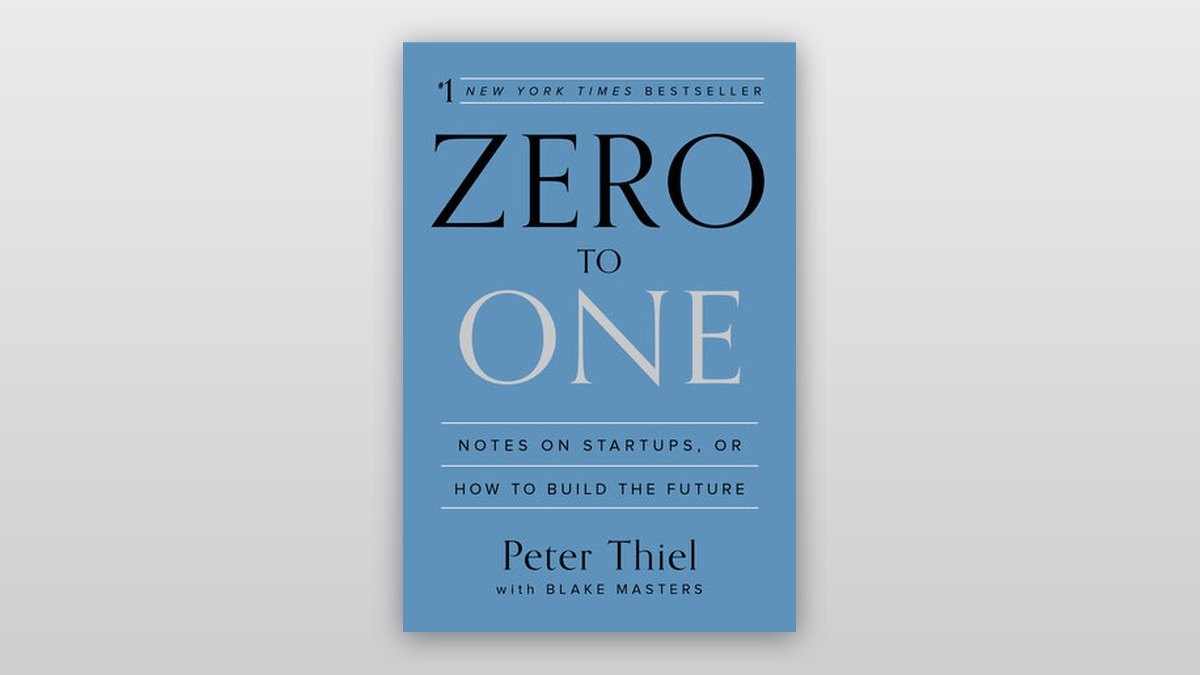
Zero to One: Notes on Startups, or How to Build the Future is a business book by Peter Thiel with Blake Masters, published on September 16, 2014 at 224 pages per Penguin Random House, which lists the hardcover at $31.00 under its Crown Currency imprint. The book grew out of a startup course Thiel taught at Stanford in 2012; in the preface he says Masters took detailed class notes that circulated widely and that the two revised them for the book. Its core idea, in the publisher's description, is that doing what is already known takes the world from 1 to n, while doing something new goes from 0 to 1, and that tomorrow's winners will escape competition because their businesses are unique.
This is a summary in our own words, drawn from the publisher, Open Library, Google Books and a few reader summaries, not from the full text of the book. The big claims are Thiel's own and we label them that way. Chapter-level points such as the power law and the seven questions come from secondary summaries, so check them against the book. For related reading on starting up, see our summaries of The Four Steps to the Epiphany and Rework.
The authors and the editions
Peter Thiel is credited as author and Blake Masters as co-writer. The publisher's author note describes Thiel as an entrepreneur and investor who started PayPal in 1998, made the first outside investment in Facebook in 2004, launched Palantir the same year and is a partner at Founders Fund. Google Books says Masters was a student at Stanford Law School in 2012 when his notes on the class, Computer Science 183: Startup, became an internet sensation. These are the publishers' own descriptions.
- Publisher listing. Penguin Random House shows a hardcover published September 16, 2014 at 224 pages and $31.00, an e-book of the same date and length, and an audiobook of 4 hours 51 minutes read by Blake Masters.
- Imprint. The publisher names Crown Currency, while Open Library and Wikipedia say Crown Business, so the imprint depends on the source and printing.
- Library records. Open Library has several records for the work. One Crown Business hardcover record from 2014 lists 195 pages, and a Crown Publishing Group record lists 224 pages, so page counts differ by record. The work page carries the same description as the publisher.
- Reception. The publisher's page calls it a #1 New York Times bestseller and quotes praise from Mark Zuckerberg, Elon Musk and others. Wikipedia also records a more critical line from Publishers Weekly, which found the discussion too abstract to offer much to the next big founder.
Prices change, so check a retailer before you buy.
The big idea: 0 to 1 versus 1 to n
The preface and first chapter, available as the publisher's excerpt on its education page, set up the frame. Thiel says copying what works, such as taking one typewriter and building a hundred, is horizontal progress, or 1 to n. Doing something new, such as going from a typewriter to a word processor, is vertical progress, or 0 to 1. He ties the first to globalization and the second to technology, and argues that technology matters more. He also says the book offers no formula for success, because every innovation is new, and that the most powerful pattern he has seen is that successful people find value in unexpected places by thinking from first principles.
He opens the first chapter with a job-interview question, what important truth do very few people agree with you on, and calls a good answer one that says most people believe something and the truth is the opposite. That contrarian habit runs through the rest of the book. All of this is Thiel's argument, not settled fact.
Monopoly versus competition
The chapter list on Google Books includes All Happy Companies Are Different, The Ideology of Competition and Last Mover Advantage, and the publisher says tomorrow's champions will escape competition altogether. Wikipedia summarizes the book as arguing for the role of monopolies in promoting innovation and profitability and for a last-mover advantage over simply being first. A reader summary adds that Thiel treats competitive markets as profit-destroying and names proprietary technology, network effects, economies of scale and branding as traits of durable monopolies.
Note the word is used in Thiel's own sense, a company so distinctive that it has no close rival, not a claim that anyone should break the law. Whether that framing fits your market is the question to test.
Secrets
The publisher's description opens with a line about believing in secrets, and the book has a chapter titled Secrets, per Google Books. In Thiel's usage, as one summary puts it, a secret is something important that most people do not yet know or believe, either about nature or about people. The question echoes the job-interview prompt from chapter one: what do you see that others do not? Treat this as the author's lens, since it cannot be tested the way a metric can.
The power law
The chapter Follow the Money is where a reader summary places Thiel's point that venture returns follow a power law: a small number of investments can matter more than all the rest combined, so a fund should back companies that could return the whole fund. We read this only from secondary summaries, so verify the details in the book. The takeaway for founders, as we read it, is that outcomes are very uneven, and picking a small number of things to do exceptionally well beats spreading effort evenly. That reading is ours.
The seven questions
A post on the list places seven questions every business must answer on page 153 of the book. We paraphrase them as asked there:
- Engineering. Can you create breakthrough technology rather than small improvements?
- Timing. Is now the right time to start this particular business?
- Monopoly. Are you starting with a big share of a small market?
- People. Do you have the right team?
- Distribution. Can you not just create the product but also deliver it?
- Durability. Will your position be defensible years from now?
- Secret. Have you found an opportunity others do not see?
The pattern is a checklist for pressure-testing a plan. Page numbers and exact wording vary by edition, so confirm in your copy.
Sales and distribution
The chapter If You Build It Will They Come is the book's treatment of selling, per Google Books. A reader summary says Thiel argues sales matters as much as the product, that many businesses fail from weak distribution rather than weak products, and that customer lifetime value should exceed the cost of acquiring the customer. We did not read those passages in the book itself, so treat the detail as secondhand. If you sell for a living, this is the chapter to read in full.
Key takeaways
These points are our reading of the themes shown on the publisher and summary pages, not quotes from the book.
- Make something new. The author argues that copying proven models adds more of the same, while creation changes what is possible.
- Aim to escape competition. The book's claim is that a distinctive business beats a crowded market.
- Hunt for secrets. Look for truths about nature or people that few others accept.
- Expect uneven outcomes. The power law idea says a few bets matter most.
- Run the checklist. Answer the seven questions honestly, including distribution.
- Do not skip selling. A good product with no way to reach buyers is a weak business, per the author.
What sellers and founders can take from it
These ideas are our analysis, not claims from the book.
- Sell what is different. If your offer looks like three others, buyers compare price. State the one thing you do that nobody else does.
- Treat distribution as a design choice. Decide early how deals will be found and closed, and whether the deal size supports the sales effort behind it.
- Use the seven questions as a deal review. For a big pursuit, ask whether the timing, the team and your durability story would convince a skeptic.
- Pair it with a validation method. The book gives frames, not procedures. For a process of testing demand with customers, see The Four Steps to the Epiphany, and for a shorter, practical take on running a lean company, see Rework.
Limits to keep in mind
- Author-sourced claims. Most of the book is Thiel's opinion drawn from his own ventures, and we found no independent test of its frameworks in the pages we read.
- Abstract in places. Publishers Weekly, via Wikipedia, found the discussion too abstract to offer much to the next big founder.
- Secondhand detail. Our chapter points on the power law, the seven questions and sales come from reader summaries rather than the book text.
- Not a formula. Thiel himself says the book offers no formula for success.
Questions people ask
Who wrote Zero to One?
Peter Thiel with Blake Masters. It grew out of Masters' notes on Thiel's 2012 Stanford startup course, per the publisher excerpt.
When was Zero to One published?
Penguin Random House dates the hardcover September 16, 2014, and Open Library also gives 2014.
How many pages is Zero to One?
Penguin Random House and Google Books list 224 pages. One Open Library record lists 195, so counts vary by record.
What does 0 to 1 mean?
Thiel's phrase for creating something new, as opposed to 1 to n, which means copying and adding more of something familiar.
What are the seven questions in Zero to One?
Engineering, timing, monopoly, people, distribution, durability and secret, as described in a reader post that places them on page 153.
Is Zero to One a sales book?
No, but it has a chapter on sales and distribution, which the author says matters as much as the product. Most of the book is about starting companies.
How much does Zero to One cost?
Penguin Random House lists the hardcover at $31.00. Prices vary by retailer and edition.
Sources
- Penguin Random House: Zero to One · Sep 16, 2014, 224 pages, $31.00 hardcover, Crown Currency, audiobook 4 hr 51 min, description
- Penguin Random House Higher Education · Preface and chapter 1 excerpt, 2012 Stanford course, author bio
- Open Library: work record · Work description, 0 to 1 versus 1 to n
- Open Library: Crown Business edition · 2014 hardcover, 195 pages
- Open Library: Crown Publishing Group edition · 2014, 224 pages
- Google Books: Zero to One · Crown, Sep 16, 2014, 224 pages, table of contents, author notes
- Wikipedia: Zero to One · Origin in CS183 notes, synopsis, reception
- David Cummings: Thiel's seven questions · The seven questions and page reference
- Graham Mann: Zero to One notes · Reader summary of monopoly, secrets, power law and sales
This summary is an independent explainer written in our own words and does not reproduce the book. Facts were read from the linked pages on October 31, 2026; read the book for the primary detail and weigh the author's claims accordingly.