How do you measure sports sponsorship ROI in 2027?
You measure sports sponsorship ROI by fixing the objective first, then choosing the metric that matches it, and only then calculating a return. The Marketing Accountability Standards Board (MASB) describes a ladder: most marketers start with media equivalency (impressions and what they would cost to buy elsewhere), move up to return on objective (ROO) measures such as awareness and brand preference, and a few reach true financial attribution (return on investment, ROI). Its own formula is ROI (%) = net profit divided by investment, times 100, and it adds that the profit must be caused by an activity tied to a stated brand objective (MASB, Part 5 of its Sponsorship Accountability series, published December 11, 2019; read November 8, 2026).
In practice that means: set the target, record a baseline before the deal starts, count every cost (rights fee, activation, hospitality, measurement), and compare exposed people or markets with matched unexposed ones. Impressions and "media value" alone prove exposure, not impact. MASB says it is unaware of published norms for sponsorship ROO or ROI, so this page gives no "typical return"; any benchmark has to come from your own data. The dollar examples below are hypothetical arithmetic, not market data.
Start with the objective
MASB's July 2018 survey work with the Association of National Advertisers found that most marketers have no standardized process for measuring return on sponsorships; just under 40% of major marketers did (MASB, Part 5; published December 11, 2019). The first fix is not a better tool. It is a written objective, because the 2026 second edition of MASB's roadmap says sponsorship ROI has to be measured against clearly defined marketing and business objectives, and the relative importance of those objectives (MASB announcement; published October 13, 2026).
- Awareness. Do more of the right people know the brand, or know it sponsors this property? Measure with a survey of recall or recognition. MASB lists brand awareness and sponsorship awareness among the diagnostic ROO metrics, below brand preference.
- Consideration and preference. Does the audience prefer your brand? MASB calls brand preference the highest order ROO metric for sponsorship and cites its multi-year study of 200 brands, in which preference had a strong relationship to market share and price premiums. That is why preference is the survey question most worth asking.
- Sales. Did purchases rise because of the sponsorship? This is the hardest to prove cleanly (see the test-and-control method below), and the easiest to overstate.
- Hospitality and B2B. Did hosting clients and prospects move deals forward? Measure with pipeline and closed business among hosted accounts versus similar accounts that were not hosted. The sources I read give no published method for this, so the formula below is my own and labeled as such.
One brand can hold several objectives at once. Rank them. A naming-rights deal built for consideration should not be judged on first-quarter sales alone.
The metrics, as formulas
- Media value (earned media value). Media value = (impressions divided by 1,000) x the CPM you would pay for similar impressions in other channels. MASB defines media equivalency as counting the impressions a sponsorship generates and comparing them with the cost of similar impressions elsewhere. Hypothetical: 10,000,000 impressions at a comparable CPM of $12 is 10,000 x $12 = $120,000. Compared with a $100,000 rights fee, that is a ratio of 1.2. Caveats: MASB calls media equivalency the "table stakes" of sponsorship measurement but says not all impressions are of equal value, and that it captures exposure, not impact. A glimpse of a logo on a scoreboard is counted the same as a deliberate ad unless you weight it.
- Cost per impression (CPM). CPM = rights fee (or the cost of the specific asset) divided by (impressions divided by 1,000). Hypothetical: $100,000 for 10,000,000 impressions is $100,000 / 10,000 = $10 per thousand. Use it to compare assets and to compare the sponsorship with buying media. MASB notes that property-provided metrics may lack transparency and may be biased, so ask who counted the impressions and how.
- Brand lift. Lift (points) = the share who prefer or recall the brand among the exposed group minus the same share among a matched unexposed group. Hypothetical: 34% preferring the brand among attendees or viewers against 30% among matched non-attendees is a lift of 4 points. Survey design is covered in its own section below.
- Promo code or unique URL attribution. Attributed revenue = redemptions x average order value. Redemption rate = redemptions divided by codes distributed. Hypothetical: 400 redemptions x $50 = $20,000. A code or link only counts people who used it, so it is a floor on direct response, not the total effect. It also cannot show that the sale would not have happened anyway. MASB warns that bottom-of-funnel sales measures often overstate sponsorship impact because they assume only the sponsorship caused the sale, ignoring advertising and price promotions running at the same time.
- Incremental sales, test versus control markets. Expected test sales = test-market sales before the sponsorship x (control-market sales during the sponsorship divided by control-market sales before). Incremental sales = actual test-market sales during the sponsorship minus expected test sales. Hypothetical: both markets sold $1,000,000 before. During the sponsorship the test market sold $1,150,000 and the control market $1,020,000. Expected test sales are $1,000,000 x ($1,020,000 / $1,000,000) = $1,020,000, so incremental sales are $130,000. The control market absorbs seasonality, weather and national advertising. MASB names test versus control as the most often used methodology and says it requires careful matched sampling. Convert incremental sales to gross profit before using them in ROI.
- Hospitality pipeline value (my own organizing formula). Expected revenue = hosted opportunities x average deal value x win rate; gross profit = expected revenue x gross margin; hospitality return = gross profit minus hospitality cost, divided by hospitality cost. Hypothetical: 40 opportunities x $50,000 x a 25% win rate is $500,000; at a 30% gross margin that is $150,000 of gross profit against $60,000 of hospitality cost. Use win rates for comparable accounts that were not hosted, not the rate for all deals, and count only deals the event moved, not deals already in late stages.
- Activation spend ratio. Ratio = activation spend divided by the rights fee. Hypothetical: $250,000 of activation on a $500,000 fee is 0.5. I found no primary source that states a recommended ratio, so treat any "rule of thumb" you hear as unsourced and set the ratio from your plan. The point of tracking it is to see the real cost of the program: the fee alone understates it.
- ROI. ROI (%) = net profit divided by investment x 100, the definition MASB cites from the Common Language Marketing Dictionary. Investment is everything you spent. Hypothetical: $500,000 rights fee + $250,000 activation + $10,000 measurement = $760,000. If the profit attributable to the sponsorship is $950,000, net profit is $950,000 - $760,000 = $190,000, and ROI = $190,000 / $760,000 x 100 = 25%. MASB adds that ROI is valid only when the return traces to a stated brand objective.
- ROO (return on objective). MASB defines ROO measures as performance measures that show whether a marketing activity achieves or exceeds a desired marketing objective, focused on attitudes and behavior. My simple scoring convention: objective attainment = (measured result minus baseline) divided by (target minus baseline). Hypothetical: baseline preference 30%, target 36%, measured 34% gives (34 - 30) / (36 - 30), about 67% of the objective reached. A second MASB-cited example, from the measurement firm Sponsorium, divides cost by a composite score: $500,000 divided by 500 points is $1,000 per point.
The ROI example shows why impressions are not a return. The same sponsorship can show a media-value ratio above 1 and a negative ROI at once, because media value is a price for exposure and ROI is profit divided by everything you spent.
Designing the brand lift survey
MASB's guidance on ROO measurement gives the design rules. Compare a test group with a control group, or exposed with non-exposed audiences, using careful matched sampling so the two groups do not differ in demographics, attitudes, purchase intent or past experience. Do not measure only at the on-site activation: MASB says that can produce artificial results because the research leads respondents, who know what answer is expected. Measure over time to see whether any difference lasts, and measure before, during and after the sponsorship (MASB, Part 5).
- Pick the primary question. Ask a brand preference question first, since MASB ranks preference highest, then add sponsorship awareness (does the respondent link your brand to this team or event?) as a diagnostic.
- Build matched groups. Recruit exposed respondents (attendees, viewers, followers of the property) and unexposed respondents who match on age, location, category use and past purchase. The sources I read give no required sample size, so set it with your research vendor and state the margin of error in the report.
- Run three waves. A baseline before the deal starts, a wave in season and a wave after. Report the change in the gap between the groups, not one reading.
- Keep the measurer independent. MASB reports that nearly half of sponsors use a third-party vendor, one in five rely on the property to evaluate, and 53% have concerns about non-transparent practices. An independent party reporting to the sponsor avoids the problem; agencies should not grade activation they built themselves.
What teams and venues actually disclose
- Manchester United plc, quarter ended March 31, 2026. Sponsorship revenue was £38.5 million, down £4.0 million, or 9.4%, from the prior-year quarter, which the company attributed mainly to the Tezos training-kit sponsorship that ended before the 2025/26 season, partly offset by other changes in its commercial partner mix (earnings release, May 27, 2026). Useful for you: a sponsorship line moves with specific deals, so ask what is in a property's revenue before reading it as health.
- Atlanta Braves Holdings, year ended December 31, 2025. Baseball event revenue, which includes ticket sales, concessions, advertising sponsorships, suites and premium seats, was $357,849 thousand against $347,925 thousand a year earlier, up 3%. The company said it rose due to contractual rate increases on season tickets and existing sponsorship contracts and new premium seating and sponsorship agreements, partly offset by lower regular-season attendance (results release, February 25, 2026). Sponsorship is not broken out on its own line, so a sponsor cannot read its market price from this filing.
- Live Nation Entertainment, year ended December 31, 2025. Its Sponsorship & Advertising segment had revenue of $1.3 billion, up 11%, and adjusted operating income of $845 million, up 11%, a 64% margin. It said sponsorship spending at its global venue portfolio grew mid-teens and that over 70% of 2026 sponsorship commitments were already booked (results release, February 19, 2026). That shows brands are still buying, not that they earned a return.
What this tells a buyer: the seller side publishes revenue, sometimes bundled, and almost never the buyer's return. MASB makes the same point about the field, saying the lack of published norms leaves each company to build benchmarks from its own proprietary data. I did not read a primary source with a typical ROI figure and I do not supply one.
Athlete and influencer activations: disclosure comes with the measurement
If your activation uses athletes or social posts, the measurement plan has to include disclosure. The FTC's Endorsement Guides, 16 CFR Part 255 (CFR edition current as of January 1, 2024, final rule of July 26, 2023; read November 8, 2026), say that when a connection between an endorser and the seller might materially affect the weight or credibility of the endorsement and the audience would not reasonably expect it, it must be disclosed clearly and conspicuously. Section 255.5 lists monetary payment and free or discounted products among material connections. The Guides' example of a professional tennis player on a talk show describes the risk when a paid relationship is not disclosed. The Guides also say advertisers should give endorsers guidance, monitor compliance and act on non-compliance, and that buying fake social followers to misrepresent influence is a deceptive practice. For measurement, that means your engagement and promo-code numbers should come from audiences who know the post is paid, and follower counts should be checked, not trusted. For college athletes specifically, see our explainer on how NIL valuations are calculated.
Measurement pitfalls
- Confusing effort with impact. MASB cautions against mixing measures of effort and activity (posts, impressions, attendance) with measures of impact (preference, sales, profit).
- Crediting the sponsorship for everything. Sales measures often overstate the effect because advertising, sampling and price promotions run at the same time. A control group is the fix.
- Letting the property grade itself. MASB says property-provided numbers may lack transparency and carry bias. Audit or independently verify them.
- Measuring only at the event. Surveys at an on-site activation lead the respondent; measure over time and off site.
- Too short a window. MASB notes sponsorships typically run for multiple years, the longer a brand is associated the stronger the link, and associations can last after the deal ends. A one-season ROI can understate or misplace value.
- Leaving costs out. The fee is not the investment. Add activation, hospitality, content, staff time and measurement.
- Using follower or like counts as proof. MASB lists likes and followers among metrics with a lower correlation to sales performance.
- No measurement budget. MASB reports that just over half of the 37% of marketers with a standard process had a measurement budget, that budgets generally run below 5% of rights fees, and that 1% to 2% may be enough for large programs while 5% or more may be needed for smaller ones. Protect that money from being spent on activation.
- Double counting. A hosted client who also redeems a promo code and appears in a lift survey can be counted three times. Assign each result to one method or remove overlaps.
A step-by-step plan
- Write the objectives and rank them. Awareness, preference, sales, hospitality or a mix, with a target and a date for each.
- Set the measurement budget first. Use MASB's reported range (1% to 2% of the rights fee for large programs, 5% or more for smaller ones) as a starting point to argue from, not a rule, and protect it in the contract stage.
- Negotiate the data. Ask the property for impression counts, attendance, audience data and the method behind each, and for the right to verify them independently.
- Take a baseline. Before launch, record preference and awareness, sales by market, pipeline in target accounts, and the cost of comparable media.
- Create the tracking. Unique codes and URLs per asset, a hospitality guest list tied to your CRM, and matched control markets or accounts.
- Include disclosure rules in athlete and creator briefs. Follow 16 CFR Part 255 and monitor posts.
- Measure during the season. Check CPM, code redemptions and lift waves, and shift activation from weak assets to strong ones.
- Calculate in order. Media value and CPM first (exposure), then lift and ROO (impact), then incremental sales and pipeline, then total investment and ROI.
- Review against the objective. Report each result next to its target, with the method and the confidence you have in it.
- Decide and repeat. Renew, renegotiate, shift assets or exit. MASB suggests reviewing the sponsorship portfolio as a whole in annual planning, with a three-year view.
Questions people ask
What is the formula for sponsorship ROI?
MASB cites the Common Language Marketing Dictionary definition: ROI (%) = net profit divided by investment, times 100. Investment should include the rights fee, activation, hospitality and measurement, and the profit has to be tied to a stated brand objective (MASB, published December 11, 2019).
What is a typical sponsorship ROI?
No primary source I read gives one. MASB says it is unaware of published norms for sponsorship ROO or ROI, because brands have different objectives, and that each company has to build benchmarks from its own data.
Is media value the same as ROI?
No. Media value (media equivalency) multiplies impressions by what comparable media would cost. MASB says it is table stakes, but it captures exposure and not impact, and that not all impressions are equal. ROI is profit divided by total investment.
How do I measure the sales effect of a sponsorship?
The most common method MASB names is test versus control: compare a market or audience exposed to the sponsorship with a matched one that is not, using the sales change in the control to adjust the expected result for the test market.
How much should I spend on measurement?
MASB reports that measurement budgets generally run below 5% of rights fees and says 1% to 2% may be enough for brands with sizable investments while 5% or more may be necessary for smaller ones.
Do athlete posts need a disclosure?
Under the FTC Endorsement Guides (16 CFR Part 255), a material connection, including payment or free products, that the audience would not reasonably expect must be disclosed clearly and conspicuously. This is general information, not legal advice.
Sources
- MASB: Sponsorship Accountability Part 5: Measurement (published December 11, 2019; read November 8, 2026) · ROI and ROO definitions, test vs. control, budgets, ANA/MASB survey results
- MASB: Sponsorship Accountability Part 1 (published October 23, 2019; read November 8, 2026) · Sales measures overstating impact; sponsorship definition
- MASB: Sponsorship Accountability Metrics Project (first posted November 6, 2017; read November 8, 2026) · Three stages: equivalency, ROO, ROI
- MASB: Sponsorship Accountability Roadmap 2nd Edition announcement (October 13, 2026) · Chapter on sponsorship ROI against defined objectives
- Code of Federal Regulations via govinfo: 16 CFR Part 255, Guides Concerning Use of Endorsements and Testimonials in Advertising (CFR current as of January 1, 2024; read November 8, 2026) · Disclosure of material connections
- Manchester United plc: fiscal third quarter 2026 earnings release (May 27, 2026) · Sponsorship revenue, quarter ended March 31, 2026
- Atlanta Braves Holdings: fourth quarter and year end 2025 results (February 25, 2026) · Baseball event revenue including sponsorships
- Live Nation Entertainment: full year and fourth quarter 2025 results (February 19, 2026) · Sponsorship & Advertising revenue and AOI
- Cornwell and Kwon, Journal of the Academy of Marketing Science, July 2020 (RePEc repository page; read November 8, 2026) · Systematic review: research on audience response outweighs research on managing the sponsorship process
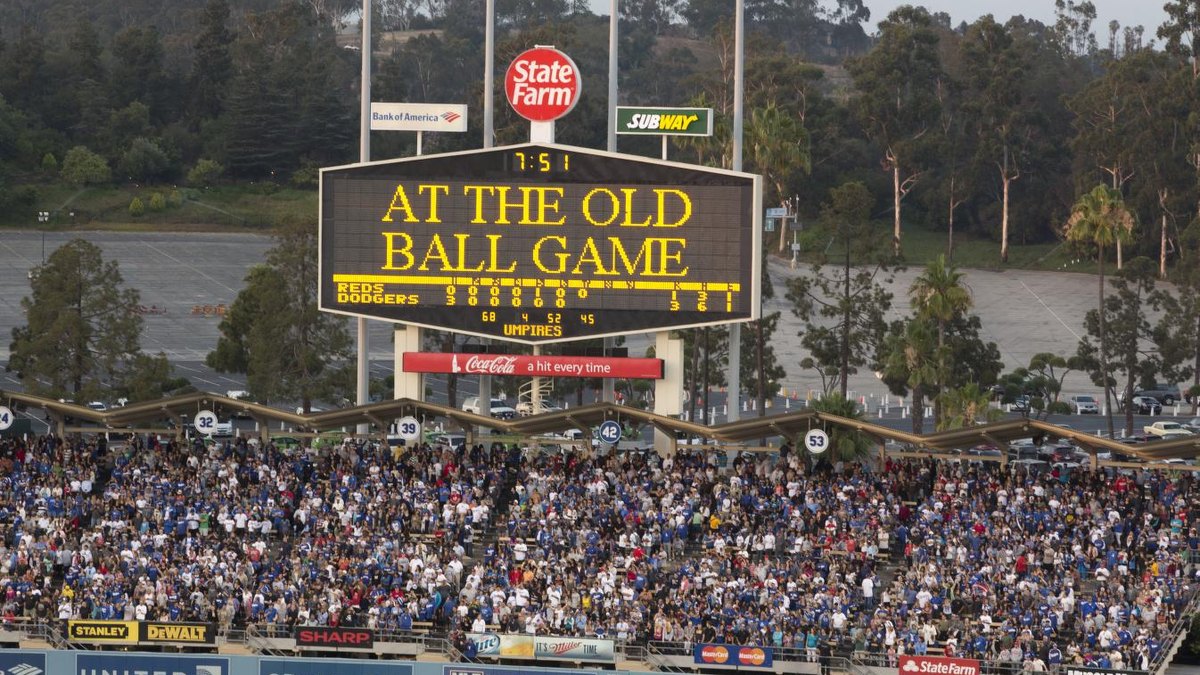
- Hero photo: Carol M. Highsmith, Dodger Stadium, Los Angeles, Library of Congress (no known restrictions on publication per the Library) · Baseball stadium with sponsor signage
Everything was read from the linked pages on November 8, 2026, and each carries its date. Gaps: the ANA site returned a 403 so only MASB's account of the joint ANA/MASB survey is used; the current eCFR returned an error, so the FTC text is the govinfo CFR edition current as of January 1, 2024; Madison Square Garden Sports and Liberty Media returned 403 responses, so neither is cited; no sponsor-side ROI, no typical return, no required survey sample size, no standard hospitality method and no recommended activation ratio were found in the primary sources, so none is given. All dollar examples are hypothetical arithmetic, not market data. This is general information, not legal, tax or financial advice.