How Does ServiceNow Defend Its ServiceNow Store Ecosystem in 2027?
ServiceNow defends the Store by gatekeeping quality and by making it cheaper and more rewarding for partners to build there, not by publishing Store numbers. On January 20, 2026 it rebuilt its Build Program around the Store as a marketplace for partner-built AI agents, with four tiers, a single annual membership fee and a Market Development Fund that reimburses 100% of select activities. It says the ecosystem has more than 2,700 partners.
What ServiceNow does not disclose is how much the Store earns, how many apps it holds, what share partners keep or what the new fee is. Its FY2025 10-K does not mention the Store by name, so how well the defense works cannot be measured from filings.
What is being defended
The ServiceNow Store is where customers find and procure apps and integrations to install on an instance, from ServiceNow and from partners, per ServiceNow's documentation. The ecosystem matters to ServiceNow because partners extend the platform into use cases it does not build itself. The 10-K describes a partner network that provides "implementation services, industry expertise and complementary technology offerings," and names AWS, Google, Microsoft and NVIDIA among technology providers and Accenture, Cognizant, Deloitte, EY, Infosys and KPMG among system integrators.
The filing never uses the phrase "ServiceNow Store." It also gives no Store revenue line, so any statement about Store revenue elsewhere is an outside estimate rather than a ServiceNow figure. This page makes none.
Defense one: certification as a gate
ServiceNow's documentation says each solution goes through a certification process covering stability, performance and data security before it is listed, with a content and marketing review as well. The Store glossary names two routes: "Built on ServiceNow" apps pass the Partner Solutions Center of Excellence process, and "Built with ServiceNow" offerings pass the Partner Acceleration process. Beta apps are labeled as experimental and can be installed only on hosted non-production instances.
For agents, CX Today reported on April 1, 2025 that ServiceNow "security-certifies all agents" so they do not introduce risk to an instance. That is a vendor claim relayed by a trade outlet. ServiceNow has published no pass rates or review times in the sources read here, so the strictness of the gate is not independently measurable.
Defense two: lowering the cost of building on the platform
The January 20, 2026 release, issued at the ServiceNow Partner Kickoff, introduced a redesigned Build Program for ISVs, developers and technology partners to "build, test, certify, and distribute solutions" on the ServiceNow AI Platform. It uses four tiers (Registered, Select, Premier and Elite) plus a new Access Tier that lets entry-stage partners start building without fully enrolling. More than 1,000 existing partners were to transition by March 2026, including AutomatePro and SailPoint.
On cost, ServiceNow moved all global partners to a "single annual membership fee" effective immediately, which it said reflects partner feedback. It did not state the amount. The same release lists a Market Development Fund with 100% reimbursement for select activities, a Strategic Investment Fund, and sell-through, deployment and specialization incentives, each aligned to the new tiers.
CRN Australia reported that partners can "access improved revenue share and incentive opportunities" and that benefits are "tied more closely to marketplace success and customer value." No revenue-share percentage appears in any source read, so partners' actual economics are unknown here.
Defense three: making the Store an AI agent marketplace
CX Today reported that in April 2025 ServiceNow revamped the Store with a new AI agents category for ServiceNow and partner agents, a native store assistant that gives AI-generated recommendations, and an updated interface; Accenture, Deloitte and HCLTech were named as partner agent providers. The January 2026 release then described the Store as "a global marketplace for enterprise-ready AI agents."
The 10-K frames agents as open: organizations can deploy "thousands of out-of-the-box ServiceNow AI agents," integrate AI agents built into third-party applications, or build their own. That openness is both a strength and a risk, since customers can choose agents that never pass through the Store.
The cost side and the rivals
Partners also show up as a cost. The 10-K says cost of professional services and other revenues rose by $69 million in 2025, "primarily driven by an increase in partner ecosystem spend," and the professional services gross loss percentage was 5% versus 2% a year earlier. ServiceNow expected that percentage to increase in 2026. So the partner channel is being funded, not just collected from.
The main comparison point is Salesforce. Its AgentExchange launch release on March 4, 2025 cited more than 200 initial partners and said its predecessor AppExchange had more than 13 million app installs, which Salesforce called the world's largest enterprise cloud marketplace (vendor-stated). ServiceNow publishes no equivalent install count for the Store in the sources read, so the two marketplaces cannot be compared on size. For the wider rivalry see ServiceNow versus Salesforce. Atlassian's marketplace and others are not compared here because no primary figures were read.
So, how strong is the defense?
- Clear actions. A certification gate, a rebuilt Build Program with four tiers, one annual fee, partner funds and an AI agents category.
- Scale claim, vendor-stated. More than 2,700 partners globally, per ServiceNow's January 20, 2026 release.
- Unmeasured outcomes. No disclosed Store revenue, app count, revenue-share percentage or fee amount, so success cannot be verified externally.
- Open flank. Customers can use third-party agents outside the Store, and partner spend is already weighing on professional services margins.
Questions people ask
How many partners does ServiceNow have?
ServiceNow said on January 20, 2026 that its partner ecosystem has more than 2,700 partners globally. That is a vendor-stated figure.
How many apps are in the ServiceNow Store?
ServiceNow has not stated a count in the sources read for this page, so none is given here.
Is there a revenue share for Store partners?
CRN Australia reported improved revenue share and incentive opportunities, but no percentage has been published in the sources read.
Do apps have to be certified to be listed?
ServiceNow's documentation says every solution goes through a certification process covering stability, performance and data security before it is listed.
What changed in the Build Program in 2026?
Four tiers (Registered, Select, Premier, Elite), a new Access Tier, a single annual membership fee, and funding such as a Market Development Fund with 100% reimbursement for select activities.
Sources
- ServiceNow Form 10-K, year ended December 31, 2025 · Partner ecosystem description, partner ecosystem spend, no Store mention
- ServiceNow press release: enhances global Partner Program (January 20, 2026) · Build Program, tiers, fee, funds, 2,700 partners
- CRN Australia: new Build partner program · Revenue share and marketplace-tied benefits wording
- ServiceNow documentation: Store glossary · Partner certification processes, beta apps
- ServiceNow documentation: ServiceNow Store · Certification and content review statement
- CX Today: ServiceNow reimagines the Store (April 1, 2025) · AI agents category, store assistant, agent security certification
- Salesforce: AgentExchange announcement (March 4, 2025) · Rival marketplace partners and install claims
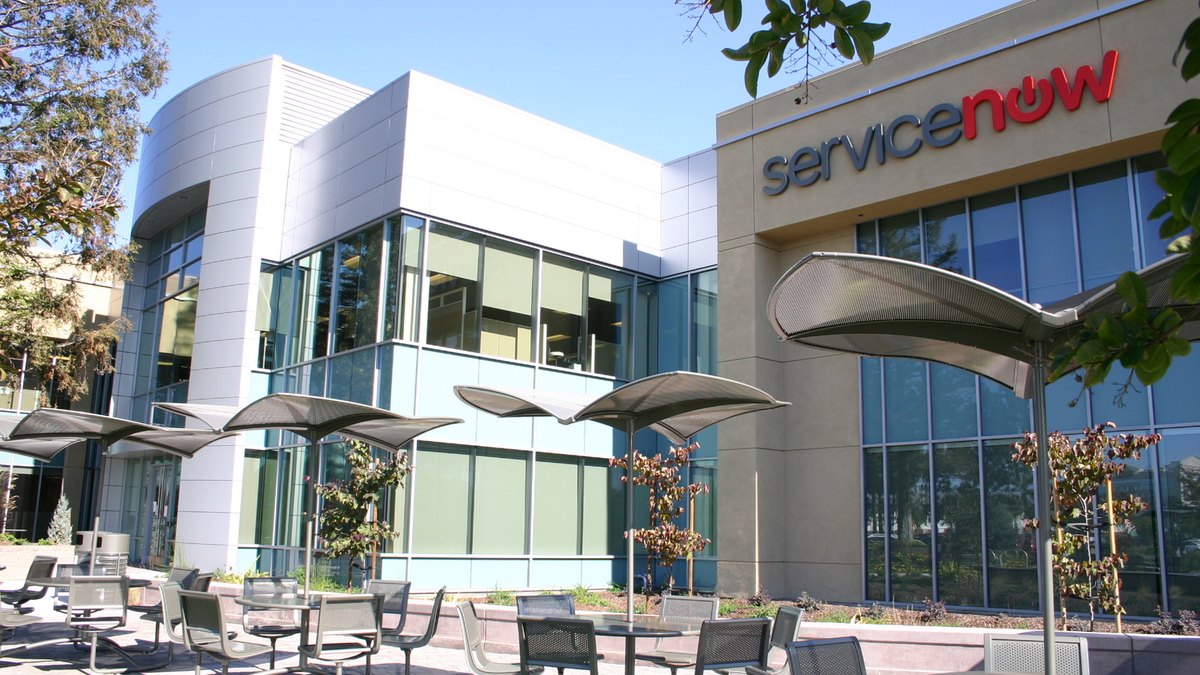
- Wikimedia Commons: ServiceNow HQ, Santa Clara · Source of the page photo (CC BY-SA 4.0)
Facts were read from the linked pages on November 2, 2026. ServiceNow figures are as stated by ServiceNow; vendor claims are labeled vendor-stated and nothing is estimated. If a page here is out of date, tell us and we will correct it from a source.
Top photo: Satyaki.snow / CC BY-SA 4.0 via Wikimedia Commons