How do you start a music lesson studio business in 2027?
You start a music lesson studio the way you start any small business, then add the rules that are specific to teaching music: check zoning and licenses for your teaching space, write studio policies before your first student, handle sheet music copyright, and find out whether your recitals need a performance license.
The U.S. Small Business Administration says most small businesses need licenses and permits from federal and state agencies, and that local governments set their own registration and permit rules. Music Teachers National Association (MTNA) guidance adds the studio-specific pieces: private lessons in your own home or studio typically do not require an ASCAP license, but advertised or public recitals can.
This page gives no income promises. No source read here states what a studio earns or what to charge, so none is quoted.
Choose your teaching space and check zoning first
Where you teach decides which rules apply. The SBA's licenses and permits page says zoning ordinances can restrict or entirely ban specific kinds of businesses from operating in an area, and that zoning laws are typically controlled at the local level. It also says you might have fewer zoning restrictions if you base your business out of your home.
MTNA's legal library lists an article titled What Every Independent Music Teacher Should Know About Business Licenses and Zoning Regulations, summarized on its legal resources page as saying that following zoning laws and acquiring a business license when necessary protects a studio from fines or closure for noncompliance. The full article needs an MTNA login, so only that summary was read for this page.
Set up the business basics
The SBA's business structure page says a sole proprietor can be held personally liable for the debts and obligations of the business, while LLC owners are not personally liable. Ask an accountant or attorney which fits your state.
- Plan the startup costs. MTNA's business planning resources describe initial needs such as teaching materials, technology and piano upkeep as things that can keep teachers from opening a studio.
- Look at insurance. The SBA's licenses and permits page says coverage added to homeowner's insurance as a rider can help with some business equipment and liability for home-based businesses.
- Consider certification. MTNA offers a professional credential, Nationally Certified Teacher of Music (NCTM). Its certification site says all music teachers actively engaged in the profession are eligible and that the program rests on five standards for a competent music teacher.
This page found no source saying a private music teacher needs a state teaching license, so check your state and local rules rather than assuming either way.
Write your studio policies before the first lesson
MTNA's business planning listing describes its Studio Strategic Planning article as covering studio organization, including policies, scheduling and curriculum. The article itself is members-only, so use public examples as a starting point. The Music Studio Startup guide lists five points to cover: payment policy, missed lessons and cancellations, inclement weather, vacation and holidays, and discontinuing lessons. It suggests a studio calendar covering the next 6-12 months.
On cancellations, MusicTeacher.com's cancellation policy guide says a 24-48 hour cancellation policy is standard for most music teachers and gives sample wording that late cancellations may be charged. It says teachers may decide whether to offer a makeup lesson, depending on the circumstances and studio policy. Those are one publisher's suggestions, not rules.
- Common cancellation notice (MusicTeacher.com)24-48 hours
- Policy topics to cover (Music Studio Startup)5
- Calendar to publish (Music Studio Startup)The next 6-12 months
Handle sheet music and copyright correctly
Teaching music means handling a lot of printed music. MTNA's copyright FAQs say copying a work without permission constitutes infringement, even when you give the copies away, and that copyright protection attaches to a work even without a copyright notice on it. Fair use permits limited copying, but the page says it does not allow unlimited copying by music teachers.
- Buy a copy per performer. The same page says each performer, including an accompanist, would have to purchase sheet music for a duet.
- Never copy consumables. It says copying should never be done for a work that is consumable, such as workbooks or exercise manuals.
- Know the narrow exceptions. It says fair use would permit an emergency copy for a recital if a purchased copy later replaces it, and that copying a single page for a difficult page turn is allowed without permission.
The page itself recommends contacting the publisher, the Music Publishers Association or a copyright attorney with specific questions.
Know when a recital needs a performance license
MTNA's ASCAP guidance says private lessons conducted in your home or studio typically do not require an ASCAP license, and invited-only recitals are generally exempt. It says the key distinction is whether the event is open and promoted to the public.
- ASCAP annual license (2025 schedule per MTNA)$313 per studio location
- Added fee per ticketed recital$26
- Seating capacity covered1,000 or less
The same page says a recital advertised or held in a public venue where anyone can attend may be a public performance, that a public performance license is still necessary even if no admission fee is charged, and that live streaming is considered a public performance. It also says individual MTNA members hosting personal recitals are not covered under MTNA's agreement. The page recommends contacting ASCAP directly for exact fees and requirements, and the figures above are from MTNA's article, so confirm current rates.
Taxes and the home studio
- Self-employment tax rate15.3% (12.4% Social Security plus 2.9% Medicare)
- Who owes itNet self-employment earnings of $400 or more
- Estimated tax paymentsGenerally required if you expect to owe $1,000 or more
- Home office simplified method$5 per square foot, up to 300 square feet
These figures come from the IRS pages on self-employment tax, estimated taxes and the home office deduction. The IRS says a qualifying space must be used exclusively and on a regular basis as your principal place of business, and that you can't deduct expenses for a part of your home used for both personal and business purposes. A piano room the family also lives in may not qualify, so ask a tax professional. This is general information, not tax advice.
If you hire other teachers
MTNA's legal resources page lists an article on the difference between an independent contractor and an employee and another on non-compete and non-solicitation agreements. Both are members-only, so read the summaries there and get legal advice before you bring on a second teacher.
A simple first-quarter checklist
- First week. Call your local government about zoning and permits for a teaching space, and decide your business structure.
- Next few weeks. Write your studio policies, buy the music you will teach from, and open a business bank account.
- By the end of the first quarter. Publish your calendar, start lessons, and decide whether any recital will be public, advertised or streamed.
- Always. Track income and expenses, set money aside for taxes, and re-check each source for current rules.
For the shared small-business setup steps, see how to start a content creation business.
Questions people ask
Do I need a license to teach private music lessons?
No source read for this page says a state teaching license is required. The SBA says local governments determine registration, licensing and permitting requirements, and MTNA's legal library says following zoning laws and getting a business license when necessary protects a studio from fines or closure. Call your city or county.
Can I teach lessons from home?
Possibly. The SBA says zoning is typically controlled locally and that home-based businesses might face fewer zoning restrictions, but confirm with your local government.
Do my student recitals need an ASCAP license?
MTNA says private lessons in your home or studio typically do not, and invited-only recitals are generally exempt, but advertised or public recitals and live streams may need one. Its article cites $313 per studio location plus $26 per ticketed recital under the 2025 schedule; see the MTNA ASCAP page and confirm with ASCAP.
Can I photocopy sheet music for my students?
Generally not without permission. MTNA says copying a work without permission constitutes infringement and fair use does not allow unlimited copying by music teachers, with narrow exceptions such as an emergency copy for a recital or one page for a page turn. See the MTNA copyright FAQs.
What should my cancellation policy say?
One publisher, MusicTeacher.com, says a 24-48 hour cancellation window is standard for most music teachers and that teachers decide whether to offer makeups. Write your own policy and share it with families before lessons begin.
How much does a music studio earn?
No source read for this page gives a typical figure, so we do not quote one. Earnings depend on your location, instrument, number of students and rates.
Sources
- SBA: Apply for licenses and permits · Zoning, local permits, home-based business and rider coverage
- SBA: Choose a business structure · Sole proprietorship and LLC liability
- MTNA: ASCAP and music teachers · When lessons and recitals need an ASCAP license; 2025 fees
- MTNA: Copyright FAQs · Photocopying sheet music and fair use
- MTNA: Legal resources listing · Summaries of the zoning, licensing and contractor articles (full texts members-only)
- MTNA: Business planning resources · Startup cost needs and studio planning article descriptions
- MTNA: Professional Certification · NCTM eligibility and five standards
- Music Studio Startup: 5 points to cover in your studio policy · Policy topics and 6-12 month calendar
- MusicTeacher.com: Music lesson cancellation policy · 24-48 hour cancellation window and makeup practices
- IRS: Self-employment tax · 15.3% rate and $400 threshold
- IRS: Estimated taxes · $1,000 expected-tax threshold
- IRS: Topic 509, Business use of home · Exclusive use rule and $5 per square foot simplified method, 300 square feet maximum
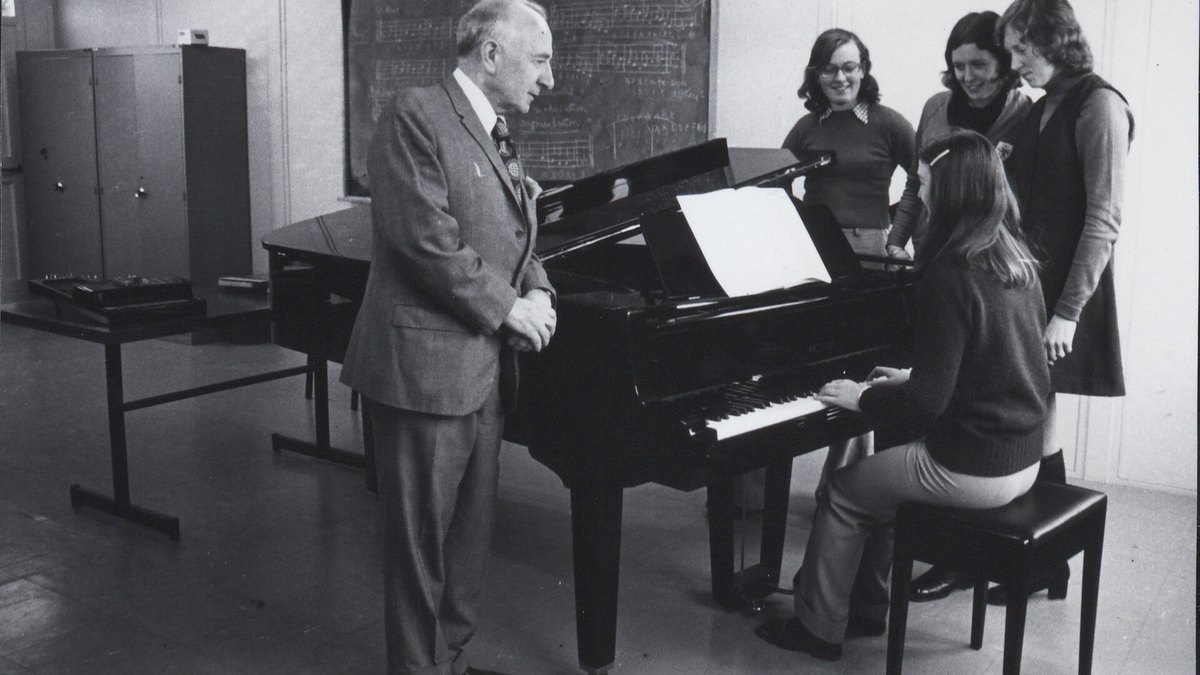
- Hero photo: "Music Education at NCPE" (c. 1974), Glucksman Library, Wikimedia Commons, no restrictions · Credit for the photo at the top of this page
Facts were read from the linked pages on November 7, 2026. Rules, fees and thresholds change, so check each source for current terms. This is general information, not legal or tax advice, and no earnings figures are promised.
Top photo: Glucksman Library / No restrictions via Wikimedia Commons