Is MuleSoft Still Growing or Melting at Salesforce in 2027?
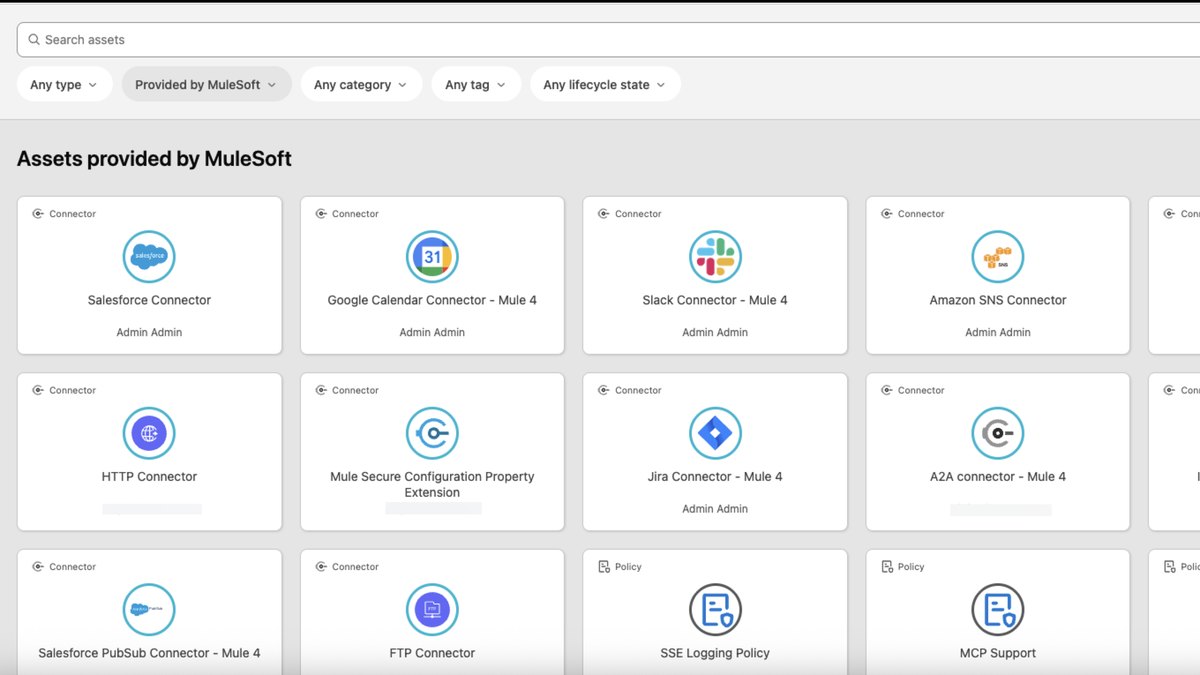
Still growing, but slowly, and Salesforce no longer lets outsiders measure it directly. The last time Salesforce published MuleSoft's growth, its Q4 FY26 investor deck (February 25, 2026) showed MuleSoft total revenue up 6% in constant currency for fiscal 2026, down from 12% in fiscal 2025, with 3% in the fourth quarter. The 10-K shows the broader Integration and Analytics line (MuleSoft plus Tableau) at $6,232 million, up 8%.
Since the first quarter of fiscal 2027 (May 27, 2026), MuleSoft sits inside a "Data 360, Headless Platform, and Other" line next to Informatica, so any 2027 MuleSoft figure would be an estimate. This page gives none.
What Salesforce last disclosed about MuleSoft
Salesforce's fiscal 2026 10-K (fiscal year ended January 31, 2026) reports "Agentforce Integration and Agentforce Analytics" subscription and support revenue of $6,232 million, against $5,775 million in fiscal 2025 and $5,189 million in fiscal 2024, an 8% increase for fiscal 2026. It describes the integration half as "Our unified Integration, Automation, and API Management offerings, powered by MuleSoft" and the analytics half as offerings "including Tableau". So this line mixes MuleSoft and Tableau and cannot be read as MuleSoft alone.
The closest MuleSoft-only numbers come from the appendix of the Q4 FY26 investor deck, which lists MuleSoft total revenue growth in constant currency: 12% for fiscal 2025 and 6% for fiscal 2026. By quarter in fiscal 2026 it shows 8%, 9%, 6% and 3%. Salesforce notes that these MuleSoft figures include professional services revenue as well as subscription and support.
Why the numbers are noisy
Salesforce says part of this line is recognized differently from ordinary subscriptions. The 10-K states that Integration and Analytics revenue includes term software licenses recognized when the software is made available, so "we expect these offerings to experience greater volatility in revenues period to period."
On the Q3 FY26 earnings call (December 3, 2025), the CFO cited "on prem revenue timing in Tableau and MuleSoft" as a partial offset and said the on-prem portion of MuleSoft and Tableau revenue is recognized in period, "which creates less predictability." Guidance that quarter was also described as partly offset by "the on prem dynamic for MuleSoft and Tableau." That points to timing and a shift away from licenses as part of the slowdown, though Salesforce does not quantify how much.
The reporting change: MuleSoft is no longer a line item
In its Q1 FY27 earnings release (May 27, 2026), Salesforce said it revised its revenue disclosure into two categories, "Agentforce Apps" and "Data 360, Headless Platform, & Other." The second category is made up of Data 360, Headless Platform, Informatica, "Agentforce Mulesoft, Agentforce Tableau and Other." Prior periods were reclassified, and total subscription and support revenue was not affected.
In the Q2 FY27 release (August 26, 2026, quarter ended July 31, 2026), that category was $3,618 million against $3,008 million a year earlier, with 20% constant-currency growth. Informatica contributed $440 million of Salesforce's subscription and support revenue that quarter, and it sits in the same category. The release has no separate MuleSoft line. With Informatica folded in, the category's growth cannot be used to say whether MuleSoft is growing or shrinking.
Where MuleSoft fits in the strategy: agents and Informatica
Salesforce is positioning MuleSoft as plumbing for AI agents. Its September 2025 announcement introduced MuleSoft Agent Fabric, described as a way to discover, orchestrate, govern and observe AI agents regardless of where they were built, with an Agent Registry, Agent Broker, Agent Governance and Agent Visualizer. The 10-K repeats that Agent Fabric "allows organizations to manage, govern, and observe agents." These are Salesforce's own descriptions; the sources read here give no Agent Fabric revenue or customer count.
Salesforce completed its acquisition of Informatica on November 18, 2025 and said combining MuleSoft's application integration and API management with Informatica's data integration and governance would produce "a comprehensive, end-to-end integration offering." On the December 3, 2025 call, CEO Marc Benioff said Informatica, Data 360 and MuleSoft together make the data foundation and that he thought it "will do about $10 billion next year in business." That is a forward statement by the CEO about three products combined, with no MuleSoft share given.
Informatica says Gartner placed it in the Leaders' Quadrant of the 2025 iPaaS Magic Quadrant, a vendor-stated claim made before the deal closed. Under one owner, MuleSoft now has an in-house data-integration sibling as well as outside rivals; this page does not rank MuleSoft against Boomi, Workato or others because no comparable primary figures were read.
So, growing or melting?
- Last disclosed: growing, decelerating. MuleSoft total revenue grew 12% in fiscal 2025 and 6% in fiscal 2026 in constant currency, with 3% in Q4 FY26.
- Not melting on the evidence available. The broader Integration and Analytics line still grew 8% to $6,232 million in fiscal 2026. Nothing Salesforce published shows MuleSoft revenue falling.
- Now unmeasurable from outside. Since Q1 FY27, MuleSoft is reported inside a category that includes Informatica, so 2027 growth cannot be derived from Salesforce filings.
- Caveat. All growth rates are Salesforce-reported and include license-timing effects, so a single quarter such as 3% may reflect timing rather than demand.
For related comparisons, see ServiceNow versus Salesforce.
Questions people ask
How fast is MuleSoft growing at Salesforce?
The last published MuleSoft figure was 6% constant-currency total revenue growth for fiscal 2026, down from 12% in fiscal 2025, per Salesforce's Q4 FY26 investor deck.
Does Salesforce still report MuleSoft revenue?
No. Starting with Q1 FY27 (May 27, 2026), MuleSoft is included in the "Data 360, Headless Platform, and Other" category with Informatica, Data 360 and Tableau, and no separate MuleSoft line is given.
How big is the Integration and Analytics line?
Salesforce's fiscal 2026 10-K reports $6,232 million, up 8% from $5,775 million. It combines MuleSoft and Tableau, so it is not MuleSoft alone.
Did Informatica replace MuleSoft?
Salesforce did not say so. It said on November 18, 2025 that combining the two would form a comprehensive, end-to-end integration offering.
What is MuleSoft Agent Fabric?
Per Salesforce, it is a product for discovering, orchestrating, governing and observing AI agents regardless of where they were built. Salesforce has published no Agent Fabric revenue.
Sources
- Salesforce Form 10-K, fiscal year ended January 31, 2026 · Integration and Analytics revenue, MuleSoft description, volatility language
- Salesforce Q4 FY26 quarterly investor deck (February 25, 2026) · MuleSoft total revenue constant-currency growth rates
- Salesforce Q1 FY27 earnings release (May 27, 2026) · Revised disclosure categories; MuleSoft folded into Data 360, Headless Platform, & Other
- Salesforce Q2 FY27 earnings release (August 26, 2026) · Category revenue, Informatica contribution, no MuleSoft line
- Salesforce Q3 FY26 earnings call transcript (December 3, 2025) · On-prem timing comments, data foundation remark
- Salesforce: MuleSoft Agent Fabric announcement · Agent Fabric components and description
- Salesforce: completes acquisition of Informatica · Closing date and MuleSoft combination statement
- Informatica: 2025 Gartner iPaaS Magic Quadrant release · Vendor-stated Leader placement
- MuleSoft documentation: Anypoint Exchange · Source of the page photo
Facts were read from the linked pages on November 2, 2026. Salesforce figures are as reported by Salesforce; vendor claims are labeled vendor-stated and nothing is estimated. If a page here is out of date, tell us and we will correct it from a source.