Empowered by Marty Cagan — Cliff Notes Summary for Sellers
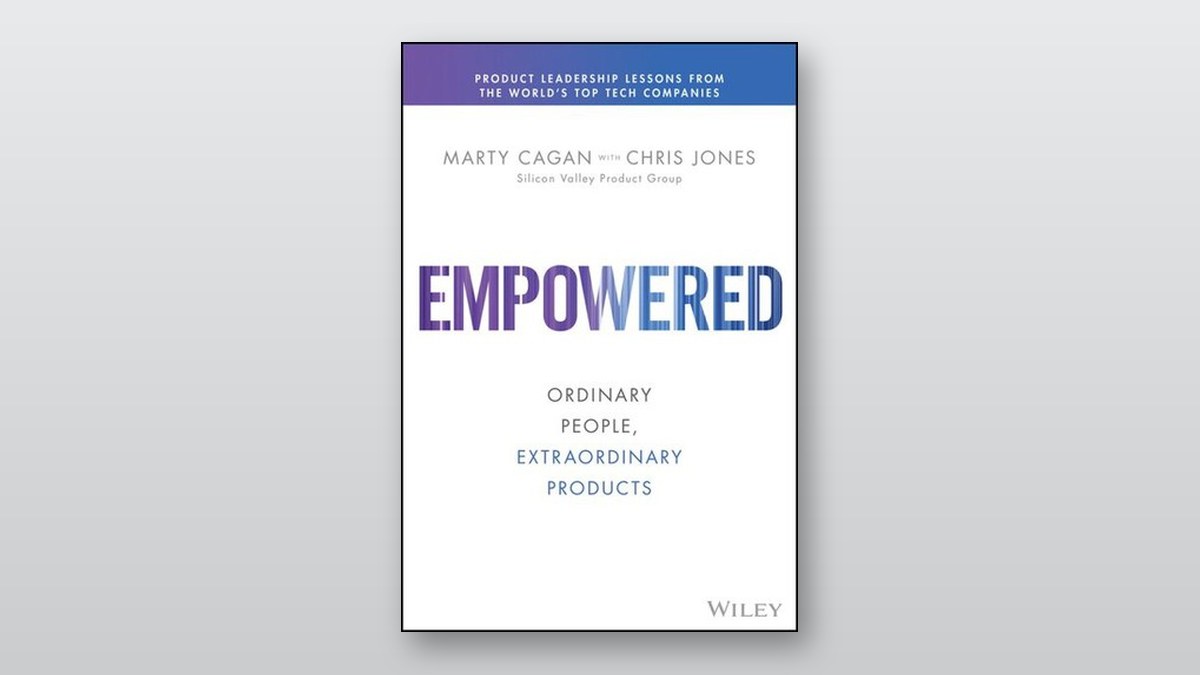
Empowered: Ordinary People, Extraordinary Products is a book on product leadership by Marty Cagan with Chris Jones, published by Wiley in December 2020 at 432 pages in hardcover (Wiley). Its core argument is that great tech companies do not win mainly by hiring special people. They win by how they let ordinary people solve hard problems together: teams are given problems to solve instead of features to build, and leaders are responsible for coaching them, setting vision and strategy, and turning that strategy into team objectives.
For sellers, the useful part is that it shows how a modern product organization is supposed to run, so you can tell whether the team across the table is a true product team or a feature team taking orders.
This page is a summary in our own words. We did not read the book itself; it draws on the publisher's page, the authors' firm and two reviews, all linked below.
What the book is and who wrote it
The Wiley product page lists the book as part of the Silicon Valley Product Group series, with a hardcover at $32.00 and an e-book at $19.00. It is presented as a companion to the same authors' earlier bestseller *Inspired*. Marty Cagan founded the Silicon Valley Product Group, known as SVPG, and held executive roles at Hewlett-Packard, Netscape Communications and eBay before that, according to Wiley.
The SVPG book page says Cagan founded SVPG in 2001 and that co-author Chris Jones joined in 2015. Andrew Clark's review notes that *Empowered* arrives 12 years after *Inspired* and shares its philosophy, while aiming mainly at product leaders rather than individual product managers.
The core idea: problems to solve, not features to build
The Wiley description asks what lets companies such as Amazon, Apple, Google, Netflix and Tesla innovate consistently, and answers that it is less about whom they hire than about how they enable people to solve hard problems together. It also says product leadership is the main reason most companies fail to use their people's potential.
The publisher contrasts the *empowered product team* with the *feature team* most companies use. Per Clark's summary, an empowered team is handed a problem, chooses its own solution and is held accountable for the result, while a feature team builds what it is told to build.
What the book covers
The publisher's topic list gives the shape of the book:
- Recruiting and coaching. Helping team members grow first to competence and then to their full potential.
- Product vision. Creating an inspiring vision for the product.
- Product strategy. Building a strategy driven by insights.
- Objectives. Turning strategy into action by giving teams objectives, meaning problems to solve, rather than features to build.
- The rest of the company. Redefining how product teams relate to the rest of the business.
- Transformation. What it takes to change an organization so its product teams are truly empowered.
Coaching and hiring, as one reviewer reads them
Clark's review says developing people is treated as the leader's first job. It reports a gap analysis that scores expectations and capability from 1 to 10, a coaching plan limited to three areas, and one-to-ones of at least 30 minutes every week that focus on development rather than status updates.
On hiring, the same review says the book favors competence and character over "cultural fit", with recruiting taking about 50% of a leader's time while a role is open. It also lists onboarding checkpoints at 1, 7, 30 and 60 days. These are the reviewer's reading, not our reading of the book.
Vision, strategy and objectives
According to Clark, a product vision should be customer-centric, act as a North Star and look ahead 3 to 10 years. Strategy, in his summary, means choosing which problems teams should solve and why, so features and projects are not strategy, and stakeholders should not be able to "buy" what teams work on.
On objectives, the review says objectives are qualitative problems to solve, each with about 2 to 4 key results that measure business outcomes rather than output. Leaders decide which problems go to which team, and firm date commitments should be rare and made only after discovery.
The review also describes two kinds of team in a larger organization: experience teams that own the user-facing journey and platform teams that reduce complexity for others.
Criticisms and limits
Clark's review is almost entirely positive. Its main reservation is that the book is aimed at product leaders, so individual contributors may get less from it, and it overlaps with *Inspired* while working as a continuation. The Beyond 8 Figures review is descriptive and promotional and does not assess weaknesses.
Our own judgment: the book describes an ideal operating model, and a company that is still organized around feature requests will need more than reading it to change. We have not tested the book's claims, and both reviews are secondary sources.
What it means for sellers
- Work out which kind of team you are facing. A feature team is likely to ask where you fit on a roadmap. An empowered team is more likely to ask which problem you help it solve.
- Lead with the problem and the outcome. If teams are measured on business results, a pitch framed around a result they own should land better than a list of features.
- Find the product leader. The book is aimed at product, design and engineering leaders, so they are the people likely to set team objectives and decide what teams spend time on.
- Do not expect a stakeholder to dictate the buy. If the book's model holds, teams choose their own solutions, so expect the team itself, not a distant requester, to weigh your product.
- Bring proof. Teams that want to learn before committing respond to evidence and an easy way to try the product.
For the earlier book, see our Inspired summary; for how teams talk to customers, see the Continuous Discovery Habits summary.
Questions people ask
Who wrote Empowered and when was it published?
Marty Cagan wrote it with Chris Jones, and Wiley published it in December 2020, according to the Wiley product page.
What is Empowered about?
Product leadership. It argues that companies get better products when teams are given problems to solve rather than features to build, and when leaders coach people and set vision, strategy and objectives.
What is an empowered product team?
A team handed a problem to solve and held accountable for results, as opposed to a feature team that builds what it is told, per Clark's review and the publisher.
Do I need to read Inspired first?
The publisher calls Empowered a companion to Inspired, and one review says it overlaps with it while continuing it. Clark's review (source) is aimed mainly at product leaders. We have not read either book, so check them yourself.
Is this summary a substitute for the book?
No. We did not read the book itself. This page is written in our own words from the publisher's page, the authors' firm and two reviews, so read the book for the full argument.
Sources
- Wiley product page · Authors, publisher, date, page count, prices, description and topics
- SVPG book page · Author background and book description
- Andrew Clark review and summary · Detailed reader summary and criticisms
- Beyond 8 Figures review · Second review, who it suits
- Open Library cover · Cover image of the Wiley edition
This summary is an independent explainer written in our own words and does not reproduce the book. Facts were read from the linked pages in November 2026; check the book itself for the authors' exact arguments. The seller suggestions are our own.
Top photo: Book cover via Open Library