Inspired by Marty Cagan: Summary and Key Ideas for Sellers
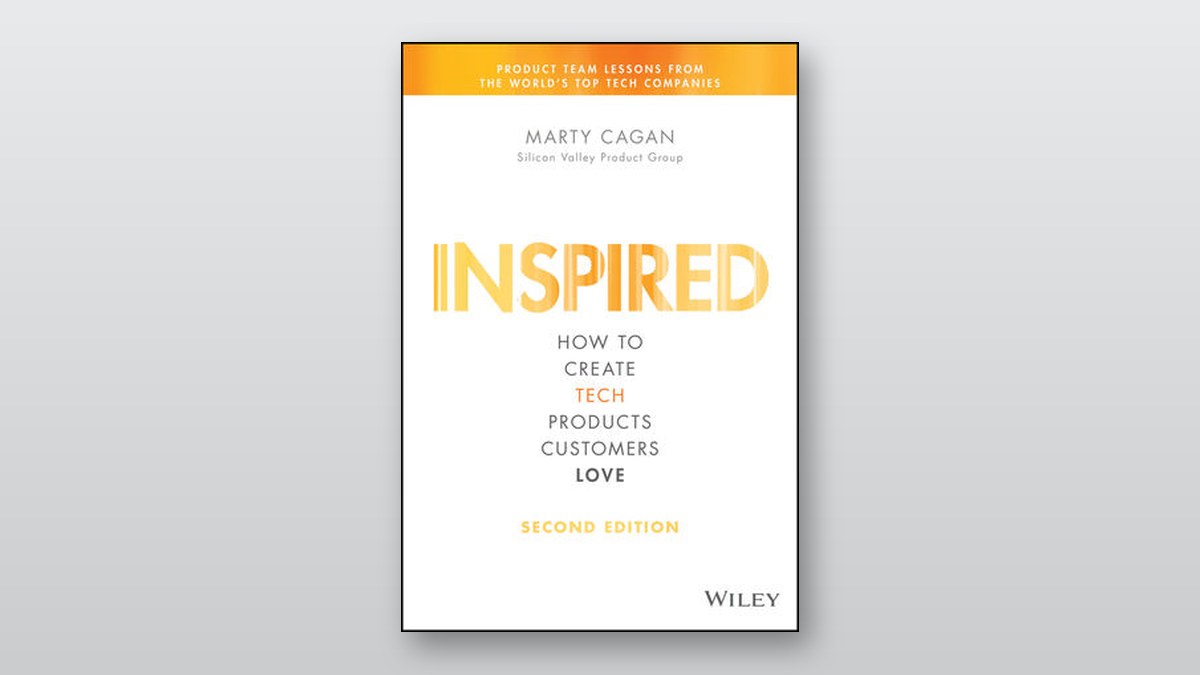
Inspired: How to Create Tech Products Customers Love by Marty Cagan argues that the best tech companies do not run product work as a delivery line for a list of features. They give small cross-functional teams a problem to solve, hold them to business results, and make them prove an idea is worth building before they build it. The book covers who you need on the team, how to discover the right product, a lightweight process, how to scale the product organization, and how to build a strong product culture.
For sellers, the useful part is the other side of the table: it shows how modern product teams decide what to build, what they worry about, and why a pitch that starts with features often goes nowhere.
The book facts below refer to the 2nd edition, published December 2017 by Wiley at 368 pages in the hardcover, per the Wiley product page. This is a summary in our own words, based on the public pages linked below, not a chapter-by-chapter retelling.
The author and the book
Marty Cagan founded the Silicon Valley Product Group in 2001 and earlier held executive product roles at Hewlett-Packard, Netscape Communications and eBay, according to the SVPG book page and the Wiley page.
Wiley describes the 2nd edition as fully rewritten from the first edition, which came out about ten years earlier. It is aimed at early-stage startups looking for product/market fit, growth-stage companies scaling their product teams, and large established companies trying to regain consistent innovation, and it includes profiles of companies such as Adobe, Apple, BBC, Google, Microsoft and Netflix.
We could not read the book's chapter list, so the sections below follow the themes SVPG and Wiley publish, supported by SVPG's own articles on the same ideas. Those articles are not the book's text.
The core idea: empowered product teams, not feature teams
The central contrast, which SVPG also lays out in its article Product vs. Feature Teams, is between two ways of working. A product team is cross-functional (product, design and engineering), is judged on business outcomes, and is empowered to find the best way to solve a problem. A feature team is handed a prioritized roadmap of features and dates and is measured on output.
The difference shows up in roles. On a product team the product manager owns value and business viability and needs real knowledge of customers, data and the business. On a feature team the product manager mostly coordinates delivery like a project manager, and responsibility for whether the feature works sits with whoever requested it. SVPG adds that skilled designers and engineers do better work on product teams, and that feature teams struggle to attract strong designers and underuse engineers.
Assembling the right people and skills
The first theme in the book's description is staffing: the right people and skills on the team. Product managers, product designers and engineers are treated as one working unit rather than a chain of hand-offs, and the book profiles product managers at well-known tech companies to show what good looks like.
Discovering the right product
Discovery is the work of finding a product worth building before committing to build it. SVPG's article The Four Big Risks, published December 4, 2017, names what discovery has to answer:
- Value risk: will customers buy it, or choose to use it? The product manager owns this.
- Usability risk: can users work out how to use it? The product designer owns this.
- Feasibility risk: can engineers build it with the time, skills and technology available? The lead engineer owns this.
- Business viability risk: does it work for the business, including sales channels, partner and legal constraints, customer acquisition cost, monetization and brand fit? The product manager owns this.
The point is that the team tests risky ideas early and cheaply, rather than finding out after launch that a product does not work.
A lightweight process and a strong culture
The remaining themes are an effective but lightweight process, how to scale the product organization, and how to build a strong product culture. The idea is that process should serve the team's learning rather than replace it, and that culture, more than a roadmap, is what lets a company keep producing products customers value.
What it means for sellers
If your buyer is a product leader or sits on a product team, this book explains how they think. This section is our own interpretation of the ideas, not something the book says about selling.
- Know which kind of team you are talking to. A feature team will ask whether you fit a requirement on a roadmap. An empowered product team will ask whether you help it solve a customer problem and move an outcome.
- Speak to the four risks. A tool or service that cuts value, usability, feasibility or viability risk gives the buyer a reason to act. A list of features does not.
- Expect the product manager, designer and lead engineer to each have a say. A deal that only wins over one of them can stall, because each owns a different risk.
- Bring evidence, not promises. Teams that test ideas before building them respond to proof from similar customers and to a cheap way to try the product.
- Watch for stakeholder-driven buying. On a feature team, the person who requested the feature owns value and viability, so that stakeholder may be the real buyer.
For a related book on how product teams learn from customers, see our Continuous Discovery Habits summary; for the build-measure-learn approach, see the Lean Startup summary.
Limits to keep in mind
The book is written for tech product organizations, so some advice assumes a level of engineering capacity, executive support and customer access that smaller or non-software companies may not have. We did not find an independent evaluation of how well its methods work, and the company stories come from the author's and publisher's own descriptions. Treat the ideas as a strong point of view from an experienced practitioner, and test them against your own situation.
Questions people ask
What is Inspired by Marty Cagan about?
How successful tech companies build product organizations and find and deliver products customers value: the right people and skills, product discovery, a lightweight process, scaling the organization and product culture.
Who is Marty Cagan?
The founder of Silicon Valley Product Group, started in 2001, who earlier held executive product roles at Hewlett-Packard, Netscape Communications and eBay.
Which edition does this summary cover?
The 2nd edition, published December 2017 by Wiley; the hardcover is listed at 368 pages. Other printings and regional editions list different page counts.
What are the four big product risks?
Value, usability, feasibility and business viability, per SVPG's article of that name. Product managers own value and viability, designers own usability and lead engineers own feasibility.
Is Inspired useful for salespeople?
It can be, because it shows how product teams decide what to build and what risks they weigh. The seller takeaways in this summary are our interpretation, not the book's advice.
Sources
- Wiley: Inspired, 2nd Edition · Publisher, date, page count, ISBN, description and author background
- SVPG: Inspired, 2nd Edition · Themes, audience and author background
- SVPG: Product vs. Feature Teams · Product teams compared with feature teams
- SVPG: The Four Big Risks · The four product risks and who owns each
- Our Continuous Discovery Habits summary · A related book on product discovery
This summary is an independent explainer written in our own words and does not reproduce the book. Facts were read from the linked pages on October 28, 2026; we did not read the full text of the book, and the SVPG articles are separate from it. Read the book for the full detail.
Top photo: Book cover via Wiley