Secrets of Question-Based Selling by Thomas Freese: Summary, Key Lessons, and RevOps Takeaways
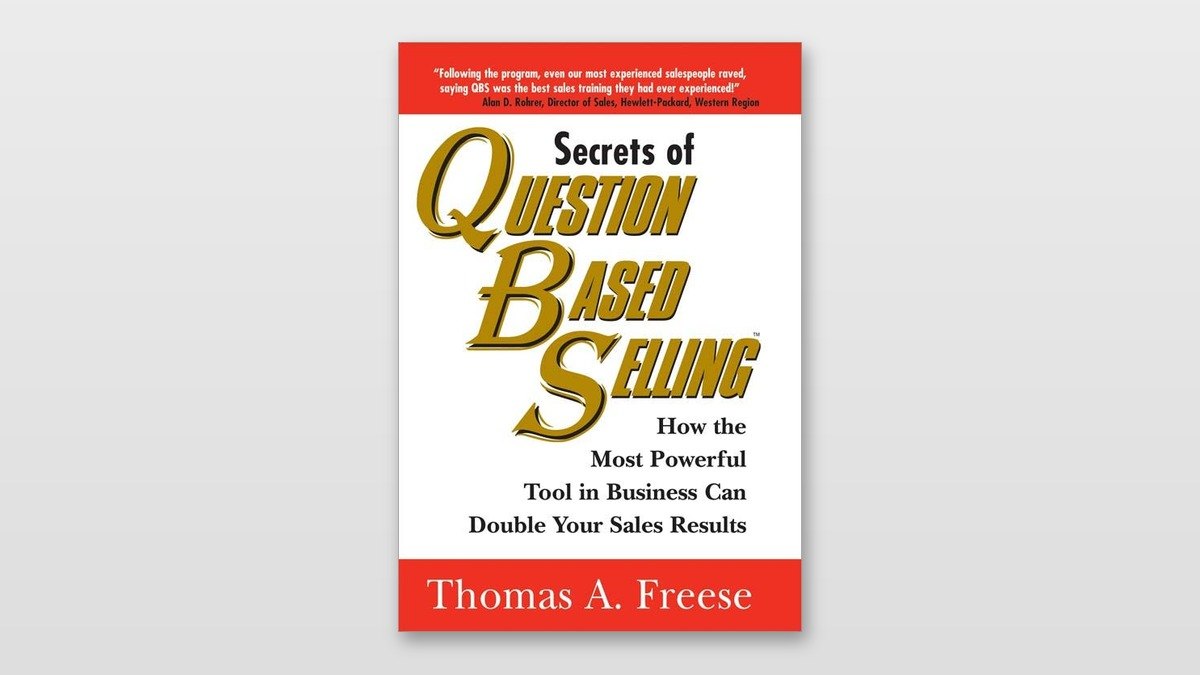
Secrets of Question-Based Selling by Thomas A. Freese argues that what a salesperson asks, and how the questions are built, can matter more than what the salesperson says. The method, called Question Based Selling or QBS, treats questions as more than a way to collect facts: they are a tool for earning credibility, getting buyers to open up and moving a deal forward. The publisher presents the book as a step-by-step program for sales effectiveness, and the author's company describes the same method on its own site.
The edition on the publisher's page is a Sourcebooks paperback published in November 2013, 352 pages, ISBN 9781402287527 (Sourcebooks, read November 8, 2026). This page is a short summary in our own words. We read only the publisher page and the author's company site, not the full book, so it covers the book's stated premise and promises, not its chapters or its question lists. The RevOps section near the end is our own application, not a claim by the author.
The book at a glance
- BookSecrets of Question-Based Selling: How the Most Powerful Tool in Business Can Double Your Sales Results, by Thomas Freese, per Sourcebooks.
- EditionSourcebooks paperback, published November 2013, 352 pages, ISBN 9781402287527, per the publisher page read November 8, 2026.
- Core ideaAsking the right questions at the right time, and structuring them well, is a core sales skill, per the publisher and QBS Research.
The publisher describes this edition as fully revised and updated from earlier ones. Page counts and covers differ between printings, so check the edition you buy. The Library of Congress search we tried did not return a record for this title, so the edition facts rest on the publisher page alone.
The author and the method
The method's home is QBS Research, Inc., whose site presents the QBS Methodology and carries a message signed by Tom Freese. The site says QBS is a registered trademark of QBS Research. Its other pages were not useful for biographical facts, so we state nothing about Freese's career, clients or results here. Anything the author or his company says about outcomes is their own claim, and we did not verify it.
Core idea: the questions matter more than the pitch
The company site opens with a complaint about how sales training is split. Firms spend heavily teaching reps what to say, it argues, and very little teaching them what to ask. It adds that asking questions is no longer enough on its own: how a question is structured can make or break the chance to engage a prospect, convey value and close. That is the heart of the book as the author's company states it.
The same site defines QBS as a systematic way to use question-based techniques for more than gathering information. We summarize the benefits it lists, in our words:
- Credibility. Questions are meant to earn trust earlier in the relationship, so a stranger is taken seriously sooner.
- Better qualification and forecasting. Well-built questions help a seller judge which leads are real.
- Wider value and differentiation. Questions can broaden what the buyer thinks your offer is worth and set you apart from other sellers.
- Access and urgency. They are meant to win attention from key decision makers and raise the buyer's sense that acting matters.
- Commitments and speed. They help secure approvals and next steps and, per the site, shorten the sales cycle and protect margins.
Credibility and curiosity
The company site says the real skill today is making buyers want to share information with a seller they do not yet know or trust. If a buyer has no wish to talk about goals and possible solutions, it argues, the questions you ask hardly matter. The publisher's overview echoes this with promises to help readers overcome customer skepticism and establish credibility sooner.
Uncovering needs
The publisher says the book shows how asking the right questions at the right time identifies a customer's needs accurately. Its other promised skills cover reaching more accounts, generating more return calls, motivating different kinds of buyers, developing internal champions and closing sooner. The publisher also says that how you sell has become more important than the product itself. That is the publisher's marketing claim and a useful statement of the book's stance.
About a Pain Funnel-style sequence
Readers often expect a staged progression from surface problem to cost to personal impact. The Pain Funnel is a Sandler Training term, and we cover it in our Sandler summary. We found no publisher or author page saying this book uses that exact funnel or describing its own step-by-step question sequence in detail, so we do not describe one. The publisher says the book is step-by-step, which suggests an ordered progression. Read the book itself for its actual sequence and wording.
Key lessons for sales reps
- Plan your questions as carefully as your pitch. The author's core complaint is that questions get far less training than talking points.
- Earn the right to ask. If the buyer does not trust you, probing can feel like an interrogation. Open with relevance and credibility.
- Use questions for more than facts. Each question can also qualify, build urgency or move toward a commitment.
- Match your approach to the buyer. The publisher lists motivating different types of buyers as a skill the book covers.
- Look for internal champions. The publisher names developing champions as a goal, so questions should help a contact sell on your behalf.
RevOps takeaways (our own application, not the book's claims)
- Discovery stage definitions. Define exit criteria that ask for evidence a rep has uncovered, such as the buyer's stated goals, the problem in their words and who else is involved, not just that a discovery call took place.
- Call scoring. Add a rubric line for question quality: did the rep ask open questions, follow up on the buyer's answers and tie questions to the buyer's goals? Score the buyer's level of engagement, not only talk time.
- CRM fields. Create structured fields for buyer-stated problem, impact in the buyer's words, decision makers named and agreed next step, so the answers reach the forecast instead of staying in call notes.
- Forecast hygiene. Because the method claims better qualification, require that late-stage deals carry those fields filled in, and flag deals where they are blank.
- Coaching. Review recorded calls for question sequences that worked, and share clips so new reps see what good looks like.
Limits
We did not read the full book, so this page covers the stated premise and promises only. We found no independent review we could rely on, and most of the claims above come from the publisher and from the author's own company, both of which have reason to promote the method. The subtitle's promise to double sales results is marketing language, and we did not test it. The book also predates much of today's buyer behavior and sales technology: this edition is from 2013.
QBS is a trademarked methodology sold as training. The book is one entry point, and we cannot say how much of the training the book includes.
Who should read it
- Early-career reps who want a framework for discovery conversations.
- Sales managers and enablement leads looking for a shared vocabulary about question quality.
- RevOps and sales operations staff designing discovery stages, scorecards and CRM fields.
- Experienced sellers who want to compare their habits with a question-first approach, with the caution that it is an older book.
For other selling frameworks, see our summaries of SPIN Selling, Gap Selling and The Sandler Selling System.
Questions people ask
What is Secrets of Question-Based Selling about?
It argues that the questions a seller asks, and how they are structured, are central to sales success, per the publisher and QBS Research.
Who wrote it and who published it?
Thomas A. Freese wrote it. The Sourcebooks page lists a November 2013 paperback, 352 pages, ISBN 9781402287527.
Does the book teach a Pain Funnel?
We found no publisher or author source saying so. The Pain Funnel is a Sandler term, covered in our Sandler summary.
How can RevOps use question-based selling?
We suggest tying discovery exit criteria, call-scoring rubrics and CRM fields to the buyer's own answers. That is our application, not the author's claim.
Is this summary a substitute for the book?
No. We read only the publisher page and the author's company site, not the full book, so read it for the actual question frameworks and examples.
Sources
- Sourcebooks: Secrets of Question-Based Selling · Edition, publisher overview, page count
- QBS Research, Inc. · Author's company: method description, trademark note
- Our Sandler Selling System summary · Related method, Pain Funnel
This summary is an independent explainer written in our own words and does not reproduce the book. Facts were read from the linked pages on November 8, 2026. We did not read the full book, a Library of Congress record was not found, and the RevOps takeaways are our own application.