The Compound Effect by Darren Hardy: Summary and Takeaways for Sales Professionals
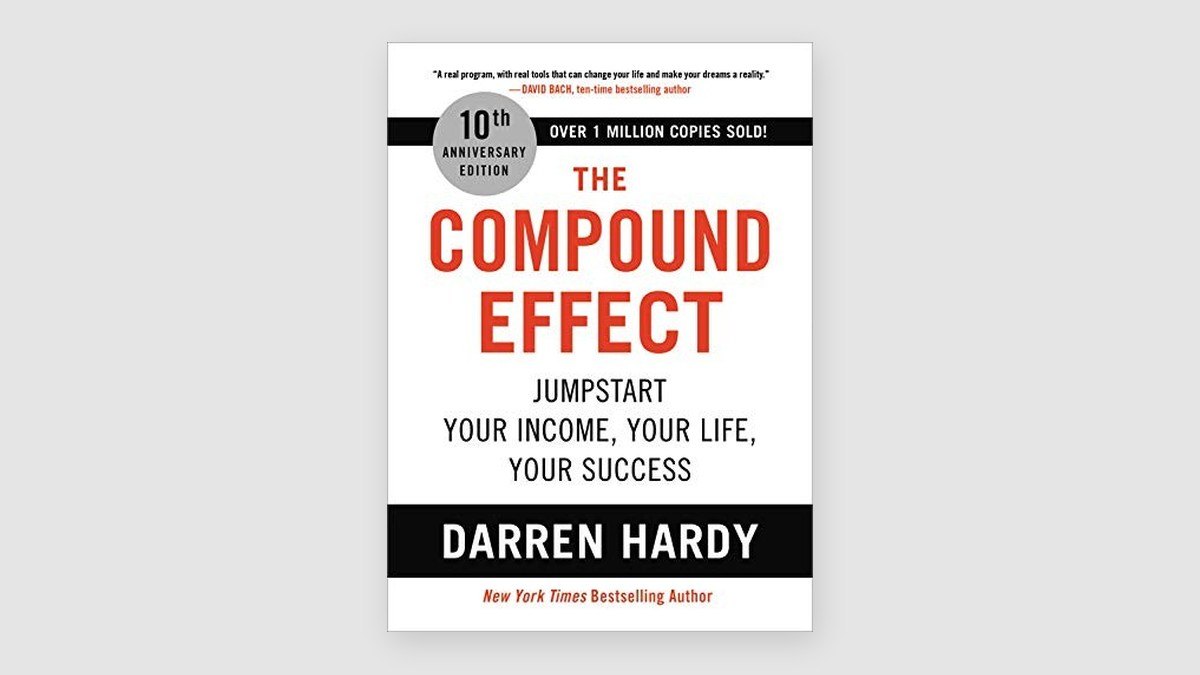
The Compound Effect is a self-improvement book by Darren Hardy, who describes himself on his own site as the founding publisher of SUCCESS magazine. Open Library lists the first edition as a 2010 release from Vanguard Press, with 172 pages and the subtitle Multiplying Your Success, One Simple Step at a Time. Its central claim, in the author's own words on his store page, is that decisions shape your destiny: small everyday choices take you either to the life you want or to disaster by default. The book is organized around five ideas that Open Library's contents list shows as Choices, Habits, Momentum, Influences and Acceleration.
This is a summary in our own words, drawn from the author's site, the publisher and book databases, not from the text of the book. The big claims are Hardy's own, so we label them that way, and the sales takeaways further down are our analysis, not the book's. For a data-driven companion on building a sales team, see our summary of The Sales Acceleration Formula.
The author and the editions
Darren Hardy is the sole author. On his About page he calls himself the founding publisher of SUCCESS magazine and an executive producer of three success-focused television networks, and says he has spent 35 years at the center of the success media industry. Those are his own descriptions. The Open Library edition record says the book comes from Hardy as publisher of SUCCESS magazine, and the later Open Library 2020 record calls him a former publisher of the magazine.
The book has been reissued several times, and the details differ by source.
- 2010, Vanguard Press. The first edition on Open Library lists 172 pages. A separate Success Books record for 2010 lists 173 pages.
- 2013, Vanguard Press. Another Open Library edition with 172 pages.
- 2020, 10th anniversary edition. Open Library lists a Hachette Go hardcover dated September 15, 2020, at 208 pages, while the Hachette Book Group page names the Balance imprint, the same September 15, 2020 date and 208 pages, with a $25.00 hardcover and a $12.99 e-book. Darren Hardy's own store sells the 10th Anniversary Edition at $18.00.
Prices and imprint names change over time, so check the retailer before you buy. None of the pages we read explains the publishing arrangement behind the early editions in detail.
The big idea: small choices, repeated
The Open Library description of the first edition says the book is based on the principle that decisions shape your destiny, and that little everyday decisions will take you either to the life you want or to disaster by default. It adds that the book offers a step-by-step system to multiply your success and chart your progress. The compounding in the title is about repetition: modest actions, taken consistently, add up.
Hardy's note on his store page frames the book as a rejection of quick fixes. He writes that there is no magic bullet, secret formula or quick fix, and that you already know most of what you need to succeed. What is missing, in his telling, is a new plan of action and new behaviors and habits that point away from sabotage and toward success. He also quotes his mentor Jim Rohn on the idea that there are no new fundamentals. These are the author's claims about his own book, not independent findings.
The five parts of the book
The contents list on Open Library shows an opening chapter, The Compound Effect in Action, followed by five parts. The publisher descriptions on Open Library and the Hachette page mention strategies for goals, bad habits, disciplines, motivation, momentum and acceleration. Our paraphrase of how those pieces fit together:
- Choices. The starting point. Everything else follows from the decisions you make every day, including the small ones that feel unimportant.
- Habits. The listings promise help eradicating bad habits, some of which you may not know you have, and installing a few key disciplines.
- Momentum. Once the choices and habits are in place, consistent action builds a force the descriptions call momentum, which the listing says makes you hard to stop.
- Influences. The people, information and surroundings around you also shape your results. The contents list names the part, and the descriptions do not spell it out, so we treat this as the least documented of the five.
- Acceleration. The closing part. The Open Library work description says it covers what it calls the acceleration secrets of superachievers.
Why the book is a quick read
At 172 pages in its first edition per Open Library, it is short, and the author says the aim is to take readers back to basics. Hardy's store note says he wrote it to clear the clutter and focus on core fundamentals you can put to work right away. That makes it more of a practical habit guide than a research text. We found no source in our reading that tests the book's claims independently, so treat the results it promises as the author's view.
Key takeaways
These points are our reading of the book's themes as shown in the contents list and the publisher and author descriptions, not quotes from it.
- Outcomes are the sum of small decisions. Look at what you do on an ordinary day, not only at big moves.
- There are no shortcuts. The author argues that quick-fix claims distort what success takes.
- Behavior beats information. Hardy says you already know most of what you need, so the gap is new habits and a plan of action.
- Habits are installable. Drop the ones that sabotage you and add a few key disciplines.
- Consistency builds momentum. Results come from repeating the right actions, and the listing says momentum can make you hard to stop.
- Your surroundings matter. The book gives a whole part to influences.
What sales professionals can take from it
These ideas are our analysis of how the book's themes could apply to selling, not claims from the book. The book is aimed at general success, not specifically at sales, and we found no source that ties it to a sales method.
- Treat activity as daily choices. Prospecting, follow-up and CRM notes are easy to skip on any single day. Decide the small daily minimums in advance, since the book's premise is that repeated small decisions decide the outcome.
- Audit the habits. List the habits that cost you deals, such as late follow-ups or skipped call prep, and pick one to replace at a time.
- Protect momentum. A steady cadence of outreach and pipeline review may serve you better than bursts of effort followed by gaps.
- Check your influences. Who you ride along with, which calls you review and which peers you trade ideas with shape your habits. Managers can use this when building a team's rhythm.
- Pair habits with measurement. The book is about behavior, not revenue mechanics. Pair it with a data-driven hiring and coaching system such as the one in The Sales Acceleration Formula, or with a framework for pushing stalled deals such as The JOLT Effect.
Limits to keep in mind
A few cautions, all our own reading rather than findings from the sources.
- Author-sourced claims. Most of what we can say about the book's promise comes from Hardy's own site, store and publisher copy.
- Not sales-specific. It is a general self-improvement book, so you will need to translate the ideas to quotas, territories and buying cycles.
- Simple on purpose. The author says the fundamentals are not new. If you already run a disciplined routine, you may find little that is new.
- Habit is not strategy. Consistent effort pointed at the wrong accounts or offer will not fix a pipeline problem.
Questions people ask
Who wrote The Compound Effect?
Darren Hardy, who describes himself on his own site as the founding publisher of SUCCESS magazine.
When was The Compound Effect published?
Open Library lists the first edition as a 2010 Vanguard Press release. A 10th anniversary edition is dated September 15, 2020.
How many pages is The Compound Effect?
Open Library lists 172 pages for the first edition, and both Open Library and the Hachette Book Group page list 208 pages for the 2020 edition.
What are the main ideas in The Compound Effect?
The contents list shows five parts: Choices, Habits, Momentum, Influences and Acceleration, built on the claim that small everyday decisions shape your destiny.
Is The Compound Effect a sales book?
No. It is a general success and habits book. The sales takeaways on this page are our own analysis of how its ideas could apply.
How much does The Compound Effect cost?
Hachette Book Group lists the 2020 hardcover at $25.00 and the e-book at $12.99, and the author's own store lists the 10th Anniversary Edition at $18.00.
Sources
- Darren Hardy: About · Author's own bio: founding publisher of SUCCESS magazine, 35 years in success media
- Open Library: first edition · Vanguard Press, 2010, 172 pages, contents list and description
- Open Library: 2013 edition · Vanguard Press, 2013, 172 pages
- Open Library: Success Books edition · Success Books, 2010, 173 pages
- Open Library: 2020 edition · Hachette Go hardcover, September 15, 2020, 208 pages
- Open Library: work record · Publisher description of strategies covered
- Hachette Book Group: 10th Anniversary Edition · Imprint, September 15, 2020, 208 pages, $25.00 hardcover, $12.99 e-book
- Darren Hardy store: The Compound Effect · Author's note, summary and $18.00 price
This summary is an independent explainer written in our own words and does not reproduce the book. Facts were read from the linked pages on October 31, 2026; read the book for the primary detail and weigh the author's claims accordingly.