Way of the Wolf Summary: Key Ideas from Jordan Belfort's Book
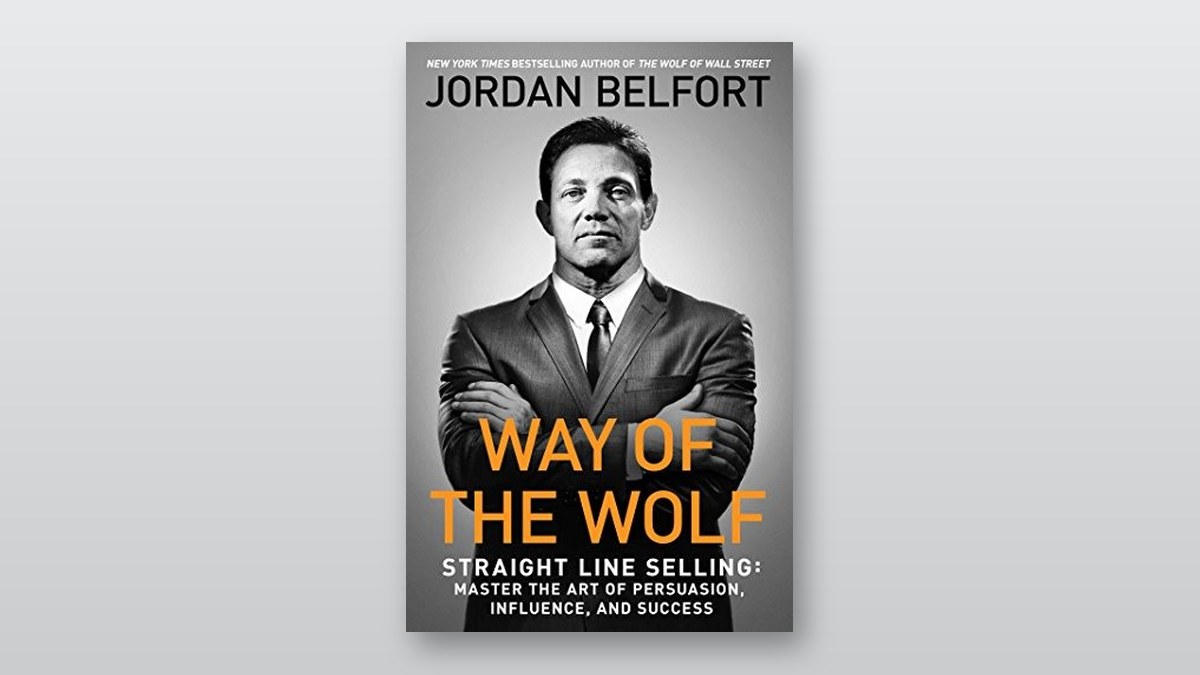
Way of the Wolf: Straight Line Selling by Jordan Belfort teaches a sales and persuasion method built on one picture: a sale is a straight line from the opening of the conversation to the close, and the salesperson's job is to control that line and keep the prospect moving along it. Per getAbstract, Belfort says the book's methods also work outside sales, for anyone who wants to be more persuasive.
The book was published by Gallery Books in 2017 (getAbstract). Belfort is the former stockbroker portrayed in *The Wolf of Wall Street*, and he pleaded guilty to securities fraud and money laundering, which is covered below. This is a short summary in our own words, based on published summaries and reviews, not a retelling of the book.
The author and the book
getAbstract describes Jordan Belfort as the former stockbroker portrayed in *The Wolf of Wall Street* and lists the book as a 2017 Gallery Books release. Open Library lists English editions of 240 to 256 pages from Gallery Books and Hodder & Stoughton, plus a Simon & Schuster audio edition dated October 10, 2017.
Shortform says Belfort developed the system after the 1988 market crash and first taught it to mostly working-class newcomers to sales. Belfort says he later refined it, removing the high-pressure tactics, and applied it in fields such as real estate, medicine, auto sales and law.
The author's record, stated plainly
Belfort's background is public record and relevant to how you read the book. According to Biography.com, he pleaded guilty in 1999 to securities fraud and money laundering, was sentenced in 2003 to four years in prison and served 22 months. Fortune, citing Bloomberg, reported that he was ordered to pay $110.4 million in restitution and other penalties and that prosecutors said in 2018 he still owed about $97 million, figures Belfort and his lawyer disputed.
Shortform reports that Belfort himself says the early high-pressure version of the system contributed to the downfall of his firm, Stratton Oakmont, and that he misused it. The book's pitch is that the version it teaches is the cleaned-up one. Whether you trust that is your call, and it is a fair reason to read the book critically.
The core idea: the Straight Line
The system treats every sale as one path from open to close, and the goal is to cover it efficiently. Shortform gives three principles: take control of the sale immediately, build rapport and use it to learn about the prospect, then move smoothly into the presentation.
Prospects tend to pull a conversation off course. Small talk is fine for rapport, Shortform says, but drift too far and it is hard to get back. getAbstract adds that Straight Line salespeople avoid chat unrelated to the sale, so everything said serves the close.
The three certainties
Per SalesBlink, every statement should raise the prospect's certainty, and three things must be settled in their mind:
- The product. They believe it will do what they need.
- You. They see you as an expert they can connect with.
- The company. They trust the business behind it.
SalesBlink also lists the prospect's journey as loving the product, trusting the brand and the salesperson, crossing a threshold of uncertainty, and feeling enough pain to act. The idea is that logic alone rarely gets there, which is why the book leans on emotion and delivery.
Tonality, state and first impressions
According to SalesBlink, the book holds that words persuade logically while tonality persuades emotionally, so how you say something matters as much as what you say. It also stresses managing your own state, summarised as certainty, clarity, confidence and courage, and making a strong first impression in the opening seconds by sounding sharp, enthusiastic and expert.
The same summary describes anchoring techniques drawn from neuro-linguistic programming, and Shortform says Belfort consulted NLP experts when refining the system.
Looping and handling objections
Per SalesBlink, when the first objection arrives the book recommends looping: lower the prospect's threshold for acting, for example with a money-back guarantee, and raise the pain threshold, meaning the felt cost of staying put. Then return to the straight line rather than arguing the point.
How a sales team can use it
These are our reading of the summaries, not rules from the book.
- Keep calls on a path. Plan the open, discovery, presentation and close, and steer back when a conversation wanders.
- Build trust in three places. Check each deal against product, rep and company certainty and note which one is weak.
- Coach delivery. Record calls and review pace and tone, not only the script.
- Keep it honest. Use urgency and emotion to help a buyer decide, not to push someone into something that does not fit. That is the line the author's own history makes worth drawing.
- Pair it with discovery. Combine it with the question methods in SPIN Selling or the Sandler Selling System.
Criticisms and limits
- Tone. getAbstract rates the book 8 out of 10 and recommends it to marketers, but calls the advice over-the-top and at times vulgar.
- Pressure. A system built around controlling the prospect can slide into manipulation, and the author says that is what happened at his old firm.
- Unsupported claims. The SalesBlink summary repeats numbers, such as how much more powerful nonverbal communication is, without evidence, and the site is promotional.
- Secondhand view. We did not have the full text of the book, so chapter detail here comes from reviews and summaries.
Questions people ask
What is the Straight Line system?
Belfort's method of treating a sale as a straight path from the opening to the close, with the salesperson controlling the conversation and moving the prospect along it.
What are the three certainties?
Per SalesBlink's summary, the prospect must be certain about the product, about you as an expert, and about the company.
Who wrote Way of the Wolf and when was it published?
Jordan Belfort wrote it, and Gallery Books published it in 2017, according to getAbstract.
Is Jordan Belfort a convicted fraudster?
Yes. Biography.com reports he pleaded guilty in 1999 to securities fraud and money laundering and was sentenced in 2003 to four years in prison, serving 22 months.
Is the book only for salespeople?
No. getAbstract says Belfort aims it at anyone who wants to be more persuasive, though most of its examples are about selling.
Sources
- getAbstract: Way of the Wolf summary · Publisher, 2017 date, Straight Line idea, review rating
- Shortform: The Straight Line Persuasion System · Principles, origin and the author's own account of misuse
- SalesBlink: Way of the Wolf book summary · Certainties, tonality, state and looping
- Open Library: Way of the Wolf · Editions and page counts
- Biography.com: Jordan Belfort · Guilty plea, sentence and time served
- Fortune: Wolf of Wall Street restitution · Restitution order and 2018 prosecutors' claim
This summary is an independent explainer written in our own words and does not reproduce the book. Facts were read from the linked pages on November 4, 2026. We did not have the full text of the book, so for exact wording and chapter detail, read the book itself.
Top photo: Book cover via Open Library