Steve Jobs by Walter Isaacson Summary: Lessons for Sellers
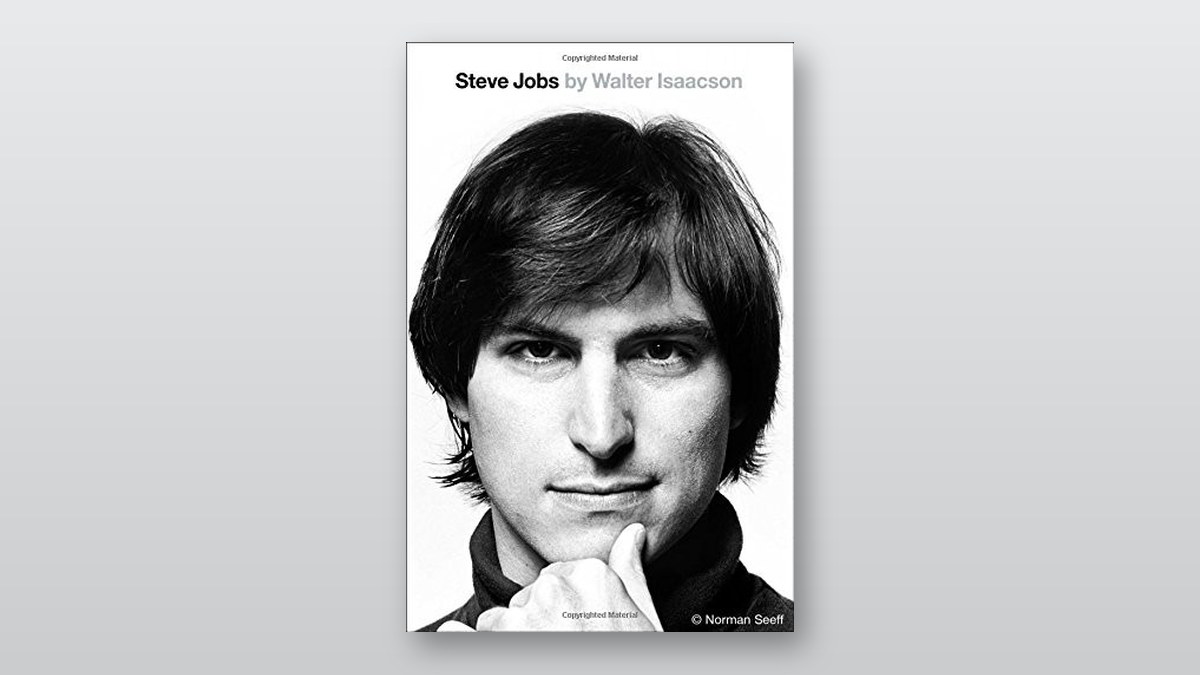
Steve Jobs by Walter Isaacson is the authorized biography of Apple's cofounder, published by Simon & Schuster in October 2011, shortly after Jobs died. It follows his life from adoption and a restless youth through Apple, NeXT, Pixar and his return to Apple, drawing on more than 40 interviews with Jobs and more than 100 with family, friends, rivals and colleagues, per Wikipedia). It runs 656 pages in the Simon & Schuster edition listed there.
The main lessons, as Isaacson himself lists them in Harvard Business Review: focus and say no, simplify, take responsibility for the whole product end to end, put products before profits, bend reality to push people past what they think is possible, and tolerate only A players. For sellers the useful parts are about prioritizing, making things simple for the buyer, and the cost of Jobs's harsh style. This is a short summary in our own words, based on Isaacson's own article and public pages, not a retelling of the book.
What the biography covers
Isaacson, a former CNN and Time executive who had written biographies of Benjamin Franklin and Albert Einstein, built the book over two years of conversations. According to Wikipedia), Jobs asked for no control over the content beyond the cover and gave up the right to read it before publication. The book has 42 chapters plus an introduction.
Open Library lists the title as first published in 2011, with many editions in many languages (Open Library).
His life arc in brief
Jobs was born in San Francisco in 1955 and cofounded Apple with Steve Wozniak in 1976, per Wikipedia. He resigned in 1985 after a power struggle with the board and CEO John Sculley, then started NeXT and bought the computer graphics division that became Pixar.
Apple bought NeXT in 1997 and Jobs returned, becoming permanent CEO in 2000. The iPhone launched in 2007. He died on October 5, 2011, aged 56, of complications of a pancreatic tumor diagnosed in 2003. In his HBR essay, Isaacson says Jobs helped transform seven industries: personal computing, animated movies, music, phones, tablet computing, retail stores and digital publishing.
Isaacson also reports that Jobs called Apple the company, not any single product, his most important creation, because an enduring company was harder to build than a great product.
Lesson: focus and the power of saying no
When Jobs came back in 1997, Isaacson writes, Apple made a dozen versions of the Macintosh. Jobs drew a grid of Consumer and Pro against Desktop and Portable and told the team to make four products and cancel the rest. (HBR)
He kept the habit. At yearly retreats with his top 100 people he asked for the 10 things to do next, then crossed out the bottom seven and said they could only do three. His own phrasing, per Isaacson: deciding what not to do is as important as deciding what to do.
Lesson: simplicity
Isaacson traces Jobs's taste for simplicity to Atari games that shipped without manuals and to design conferences in the late 1970s. In the HBR piece the examples are concrete: Jobs wanted a one-button mouse at $15 where the Xerox version had three buttons and cost $300; he pushed the iPod team to reach anything in three clicks; and he cut a proposed iDVD design down to one window and a Burn button (HBR).
The important distinction is that this was simplicity from conquering complexity, not ignoring it. Designer Jony Ive is quoted saying that to be truly simple you have to go really deep.
Lesson: control the whole product, end to end
Isaacson says Jobs believed the best route to simplicity was integrating hardware, software and services, as with an iPod, a Mac and iTunes working together. Apple took responsibility for the experience from the chip in the iPhone to buying it in an Apple Store (HBR).
Isaacson is balanced about this. He notes that Microsoft in the 1980s and Google more recently chose a more open approach that sometimes proved the better business model, and that Jobs's way did not always maximize short-term profit.
Lesson: product launches, presentation and storytelling
The sources we could read say less about keynote stagecraft than about presentation in a wider sense. Isaacson describes the doctrine of "impute", from an early mentor, Mike Markkula: people judge a book by its cover, so how a product is packaged and presented shapes how it is perceived. Jobs obsessed over the Macintosh box in 1984, and he and Ive treated unpacking an iPhone as a small piece of theater (HBR).
Isaacson adds that at almost every product launch of the decade before his death, Jobs closed on a slide showing a sign at the intersection of Liberal Arts and Technology Streets, the theme he saw running through Jobs's life. A related habit: Jobs would delay a product, such as the iPad, to fix a detail he felt was off.
The reality distortion field
Colleagues named it after a Star Trek episode, and it is the title of Chapter 11 of the book (Wikipedia)). Isaacson says Jobs used it to push people to do what seemed impossible, such as getting Wozniak to build the Breakout game in four days, or getting Corning to make the iPhone's glass in under six months (HBR).
Outsiders called it bullying and lying; people who worked with him said it led to extraordinary results. Original Mac team member Debi Coleman is quoted saying you did the impossible because you did not realize it was impossible.
Lesson: hire and keep A players
Isaacson says Jobs's toughness grew from a desire to work only with the best and to avoid what he called the bozo explosion, where politeness lets mediocre people stay. Jobs told him that if something is bad he says so to the person's face (HBR).
Isaacson is careful here: he says the harsh behavior was probably not necessary, and warns that CEOs who copy the roughness without Jobs's ability to inspire loyalty are making a dangerous mistake. He also reports that Jobs's top players tended to stay longer than those at companies with gentler bosses.
What a seller or sales leader can take from it
These are our own applications, not claims by Isaacson.
- Cut your list. Jobs's three-from-ten exercise works for a territory: name the few accounts and activities that matter and drop the rest.
- Make the buyer's path simple. His test was whether a user could get where they wanted with the fewest steps. Ask the same of your demo, proposal and pricing page.
- Treat packaging as part of the message. The idea of "impute" suggests a proposal's look and first minute set expectations before the content does.
- Talk, do not just present. Jobs's dislike of slide-driven meetings is a reminder to run discovery as a conversation.
- Keep the bar high without the cruelty. Honest, direct feedback is useful; Isaacson himself says the abuse was probably not needed.
- Watch the incentive. Jobs argued that when sales and marketing people take over a company the product people disengage. Sellers can read that as a prompt to keep product feedback flowing from the field.
Criticisms of Jobs and of the book
Isaacson's own account does not excuse the behavior. In the HBR article he asks whether the stormy conduct was necessary and answers probably not, and quotes Wozniak saying the contributions could have come without so many stories of terrorizing people, though Wozniak adds that running the Mac project his way would probably have been a mess (HBR).
Some people close to Jobs disliked the book itself. Wikipedia) reports that Laurene Powell Jobs, Tim Cook and Jony Ive disapproved, with Cook calling it a "tremendous disservice" and Ive saying his regard for it was very low. Critics of this kind of business biography also point out that taking management lessons from one extraordinary person risks copying the style without the results.
A limit of this page: we did not have the full text of the book, and could not open the New York Times or Guardian reviews, so we have not summarized them. Read the book for the full detail and the reviews for independent judgment.
Questions people ask
What is Steve Jobs by Walter Isaacson about?
The authorized life of Apple's cofounder, from his early years through Apple, NeXT, Pixar, his return to Apple and his death in 2011, based on more than 40 interviews with Jobs.
Who published it and when?
Simon & Schuster, in October 2011, after Jobs died on October 5, 2011.
What are the main lessons?
Per Isaacson's HBR article: focus, simplicity, end-to-end responsibility, products before profits, bending reality and hiring only A players.
What is the reality distortion field?
A name colleagues gave Jobs's ability to push people to do what seemed impossible. Chapter 11 of the book is named for it.
Is it useful for salespeople?
Yes for prioritizing and simplifying what you offer, but it is a biography, not a selling method, and Isaacson warns against copying Jobs's harshness.
Sources
- Harvard Business Review: The Real Leadership Lessons of Steve Jobs · Isaacson's own list of lessons, with the anecdotes used here (April 2012)
- Wikipedia: Steve Jobs (book) · Publication, interviews, chapters, reception and criticism
- Wikipedia: Steve Jobs · Life dates and Apple, NeXT and Pixar timeline
- Open Library: Steve Jobs · Editions, 2011 publication and cover
- Simon & Schuster: Steve Jobs · Publisher's page for the book (not loaded by our tools)
This summary is an independent explainer written in our own words and does not reproduce the book. Facts were read from the linked pages on October 20, 2026. We did not have the full text of the book, so for exact wording and chapter detail, read the book itself.
Top photo: Book cover via Open Library